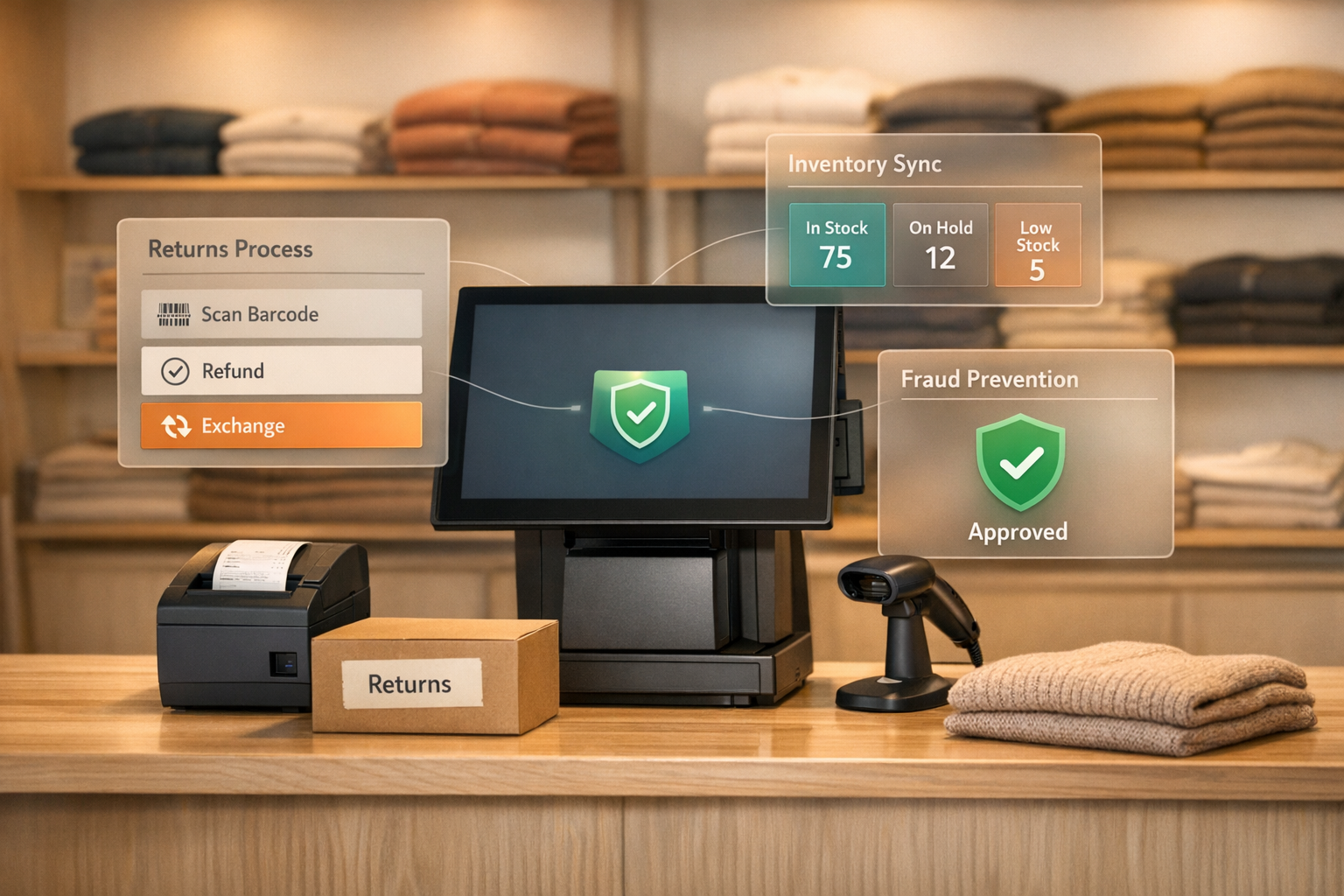
92% of shoppers check a brand’s return policy before buying, and 95% won’t return after a bad return experience. These numbers highlight how returns directly affect customer loyalty. A smooth, self-service return process can turn returns into a chance to keep customers happy and encourage repeat purchases.
Here’s why self-service returns matter:
- Ease builds trust: When returns are simple, 96% of customers are likely to shop again.
- Convenience drives satisfaction: 73% of shoppers prefer resolving issues without contacting support.
- Encouraging exchanges retains revenue: Offering exchanges instead of refunds keeps customers spending with your brand.
- Automation saves time: Automated tools reduce manual tasks, cutting costs and improving efficiency.
Self-service return tools, like ForthRoute, simplify the process with features like instant shipping labels, automated rules, and exchange-first options. These tools not only reduce friction but also help businesses retain revenue and build stronger customer relationships.
Self-Service Returns Impact on Customer Loyalty Statistics
How to scale delightful customer experiences with self-service support
What Research Shows About Returns and Customer Loyalty
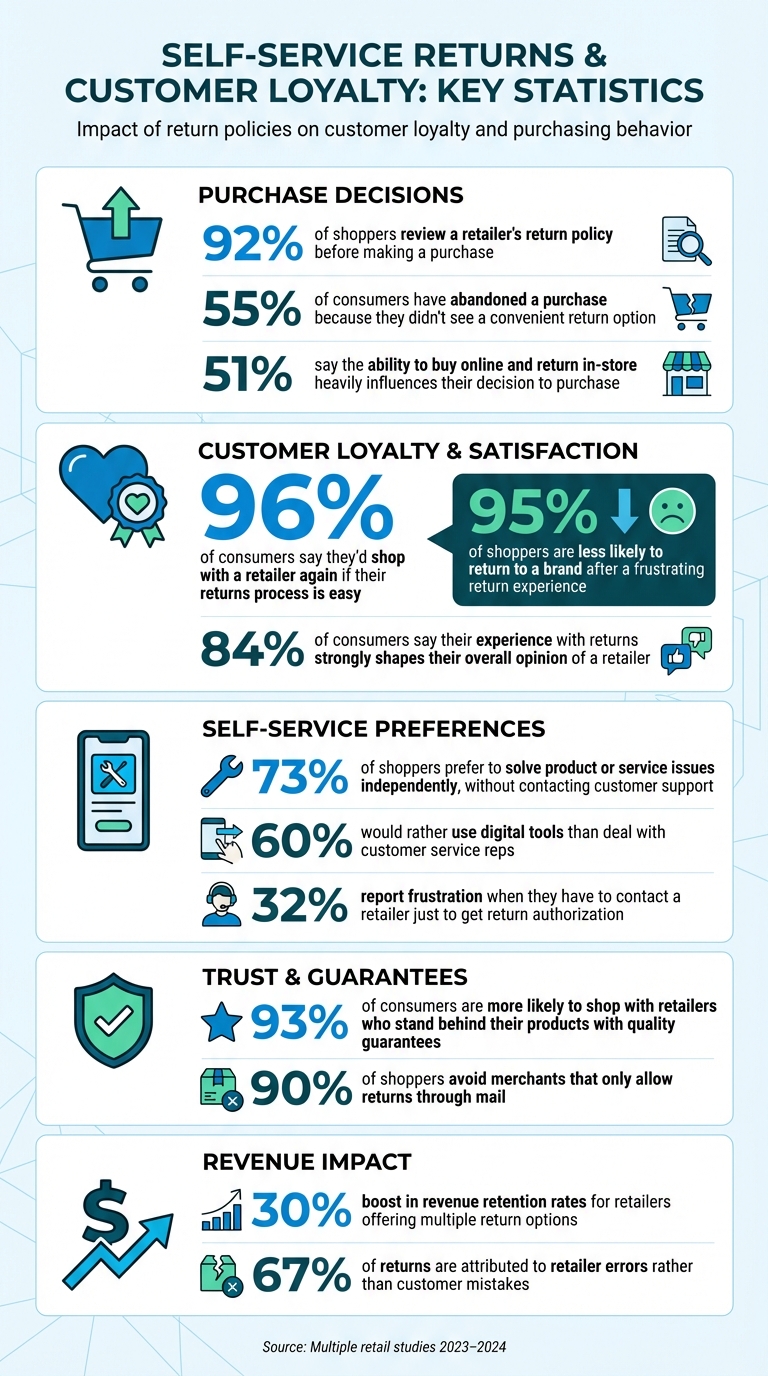
The data paints a vivid picture: 96% of consumers say they’d shop with a retailer again if their returns process is easy. On the flip side, a poor returns experience has the opposite effect - 95% of shoppers admit they’re less likely to return to a brand after a frustrating return. These numbers highlight the critical role returns play in turning one-time buyers into loyal customers.
Returns aren’t just an afterthought in the shopping journey. 84% of consumers say their experience with returns strongly shapes their overall opinion of a retailer. In other words, how you handle returns doesn’t just reflect your customer service - it reflects your entire brand. A hassle-free return can transform a dissatisfied buyer into a repeat customer, while a complicated process can send them packing. These insights set the stage for why self-service returns are a game-changer.
Making Returns Easy Increases Satisfaction
When customers can manage returns on their own terms, their satisfaction skyrockets. In fact, 73% of shoppers prefer to solve product or service issues independently, without needing to contact customer support. This isn’t about avoiding people - it’s about having control and saving time.
Traditional return processes often create unnecessary friction. 32% of customers report frustration when they have to contact a retailer just to get return authorization. Removing these hurdles not only improves the experience but also helps keep customers loyal. Alongside ease, having clear and transparent policies plays a major role in building trust.
Clear Policies Build Trust
A straightforward return policy is more than just fine print - it’s a trust signal that influences whether a shopper clicks “Buy Now.” When your policy is easy to find and understand, customers feel reassured about making a purchase.
"92% of shoppers review a retailer’s return policy before making a purchase. What they find can make or break their decision to buy." - Loop Returns
Offering guarantees or warranties strengthens that trust even further. 93% of consumers are more likely to shop with retailers who stand behind their products with quality guarantees. These commitments reduce the perceived risk of buying, encouraging shoppers to give your store a chance.
Easy Returns Lower Purchase Risk
A simple return process directly addresses a major hesitation for shoppers: “What if it doesn’t work out?” 55% of consumers have abandoned a purchase because they didn’t see a convenient return option. That’s over half of potential customers lost before they even reach checkout.
Convenience matters more than many retailers realize. 90% of shoppers avoid merchants that only allow returns through mail. Offering multiple return options, including in-store returns, meets customer needs. In fact, 51% of consumers say the ability to buy online and return in-store heavily influences their decision to purchase.
Interestingly, being generous with your return window can also reduce return rates. Extending a policy from 30 to 90 days, for example, gives customers more time to grow attached to their purchases. This psychological effect, known as the "endowment effect", makes them less likely to return items they’ve had for longer. By extending return windows, you not only build trust but also retain more revenue.
Why Self-Service Returns Work
Self-service return portals are a win-win for both customers and businesses. They simplify the return process, improve customer satisfaction, and help companies save time and money. Research backs this up: 73% of shoppers prefer resolving issues on their own, and 60% would rather use digital tools than deal with customer service reps. Let’s break down how these portals deliver faster results, reduce manual workloads, and encourage exchanges that keep revenue flowing.
Customers Get Faster Results
Speed matters when it comes to returns. Self-service portals are available 24/7, cutting out the delays that come with manual processes. Once a customer submits a return request, the system automatically approves it and provides a shipping label or QR code instantly. No more endless back-and-forth emails with support agents. Customers simply enter their order details, select the item they want to return, and get their label right away. If the issue is size or color, the portal can even suggest replacement options on the spot. This quick turnaround not only delights customers but also streamlines operations for businesses.
Merchants Save Time and Labor
Handling returns manually can overwhelm support teams. In fact, 32% of customers still need to contact a retailer just to get return authorization, meaning nearly one-third of returns require human involvement. Automating these routine tasks frees up your team to focus on more complex issues.
"Putting returns on autopilot provides a painless return experience for both you and your shoppers, while freeing your team up to work on other tasks."
– Michael Keenan, Shopify
Tools like Gorgias integrate seamlessly with self-service portals, letting agents track return statuses directly from their dashboards and close tickets faster. Considering that return processing costs can eat up anywhere from 20% to 65% of the product's value, automation is a game-changer. It allows your team to reserve their energy for cases that really need human attention.
Exchanges Retain Revenue
Self-service returns aren’t just about speed - they can also help you hold onto revenue. Retailers offering multiple return options see a 30% boost in revenue retention rates. Why? Because making exchanges as easy as refunds keeps customers spending within your store. A refund might end the relationship, but an exchange gives you another chance to satisfy the customer. For example, if someone says an item is "too small", the system can immediately suggest the next size up based on your inventory.
"A self-service return workflow that makes it easy to exchange returned items offers positive reinforcement to maintain the brand relationship, rather than ending it."
– Beth Owens, Ryder
Some businesses sweeten the deal by offering bonus store credit - like an extra $5 or $10 - if customers opt for an exchange instead of a refund. This small incentive can make a big difference, encouraging customers to stay loyal while boosting your bottom line. By turning refunds into exchanges, you’re not just retaining revenue - you’re building stronger, longer-lasting customer relationships.
sbb-itb-a3e286c
What Makes Self-Service Return Tools Effective
Not all self-service return systems are created equal. The best ones stand out by offering features that simplify the process, eliminate hassle, and keep customers loyal to your brand. Here's why this matters: 84% of consumers check a return policy before buying, and 44% will jump to another brand if they're unhappy with it. The most effective tools share three key features: branded portals that align with your store's look, automated rules that cut down on delays, and instant label generation to suit every customer's needs.
Branded Portals That Feel Like Home
A return portal that mirrors your store's design builds confidence. It reassures customers they're still engaging with your brand, not a third party. This matters because 95% of shoppers say a bad returns experience makes them less likely to buy from that brand again.
Branded portals also give you full control over the return journey. You can tailor return windows, create policies for final sale items, or even suggest personalized exchanges. For instance, if a customer returns a shirt marked "too small", the portal can instantly recommend the next size up based on your inventory. It’s like having an in-store associate guide them - without adding work for your team.
"A self-service return workflow that makes it easy to exchange returned items offers positive reinforcement to maintain the brand relationship, rather than ending it."
– Beth Owens, Ryder
Automated Rules That Keep Things Moving
Manual approvals slow everything down. Automation, on the other hand, can handle over 60% of customer support requests. By setting rules like "auto-approve returns under $50" or "reject items marked final sale", you let the system process eligible returns instantly, any time of day.
This frees up your team to focus on more complex cases that require a human touch. For low-cost items where shipping costs exceed the product's value, automated rules can even trigger returnless refunds, saving you money and making customers happy.
Instant Labels and QR Code Convenience
Once a return is approved, customers expect immediate access to their shipping label. Any delay - like waiting for an email or needing a printer - creates friction. Instant label generation fixes this by providing a prepaid shipping label or QR code right away.
QR codes are especially helpful since about 33% of U.S. consumers don’t have a printer at home. These customers can simply show the QR code on their phone at a carrier drop-off location, like UPS or USPS, where the carrier prints the label for them. It’s a seamless option that removes a common barrier. Some merchants also use "pay-on-scan" labels, which means they’re only charged for shipping if the item is actually returned. This approach protects your margins while keeping the process smooth for customers.
How ForthRoute Applies These Principles
ForthRoute brings research-backed strategies to Shopify merchants, simplifying the return process while focusing on customer retention. With a subscription cost of $19/month and a $1.50 fee per label, the platform automates everything from approval rules to shipping labels, prioritizing exchanges and store credit over direct refunds to help build loyalty.
Automated Processing from Start to Finish
Gone are the days of endless email exchanges delaying returns. With ForthRoute, customers simply input their order number and email, select the items they want to return, pick a reason, and choose a resolution. The system then automatically applies pre-set rules - like auto-approving returns under $50 - and instantly generates a prepaid shipping label or QR code. This streamlined process aligns with customer preferences, as 73% of shoppers prefer solving issues independently without contacting support. By handling these tasks automatically, ForthRoute not only meets customer expectations but also allows support teams to focus on more complex issues.
But ForthRoute doesn’t just stop at making returns easier; it actively encourages customers to exchange items instead of opting for refunds.
Prioritizing Exchanges Over Refunds
To keep revenue within your business, ForthRoute uses AI-driven prompts to guide customers toward exchanges before offering refunds. For instance, if a customer returns a shirt marked "too small", the AI suggests the next size up. Merchants can even sweeten the deal by offering bonus credit for exchanges, turning a potential loss into an opportunity for a new purchase. This approach transforms returns into a chance to re-engage customers and maintain sales momentum.
Beyond facilitating exchanges, ForthRoute uses return data to optimize operations and address recurring problems.
Using Return Data to Improve Operations
ForthRoute doesn’t just process returns - it learns from them. By tracking return reasons and generating detailed reports, the platform identifies patterns like frequent complaints about sizing issues. Insights like these can prompt updates to sizing charts or discussions with manufacturers to address product inconsistencies. Additionally, by monitoring the return process from "in-transit" to "complete", merchants can pinpoint and resolve bottlenecks in their fulfillment systems. This data-driven strategy is particularly crucial, as 67% of returns are attributed to retailer errors rather than customer mistakes. Addressing these issues can significantly reduce return rates and improve overall customer satisfaction.
Conclusion
96% of shoppers say they'd return to a retailer if the returns process was simple. Self-service return tools make this possible by cutting down on delays, removing unnecessary steps, and giving customers more control. When the process feels easy, it builds trust - and trust turns into repeat purchases.
A smooth return experience isn't just a nice-to-have; it's a key part of keeping customers around. Tools like ForthRoute help by focusing on exchanges instead of refunds and automating tedious tasks. This approach turns what could be lost revenue into chances to keep customers engaged. Plus, having a clear, easy-to-understand return policy can actually encourage shoppers to buy more by reducing hesitation before they even hit "Add to Cart."
Research backs up these strategies, and ForthRoute brings them to life with features like automated workflows, exchange-first options, and insights from return data. Designed for Shopify merchants, the platform offers an affordable way to boost customer loyalty without overwhelming support teams. Its transparent pricing ensures merchants can see the value without any surprises.
When returns are as hassle-free as buying, customers feel more confident - and that confidence keeps them coming back. Over time, this trust leads to higher lifetime value and steady growth for your business.
FAQs
How do self-service returns build customer loyalty?
Self-service returns streamline the post-purchase experience, making it easier for customers to handle returns while feeling appreciated. When shoppers can quickly initiate a return, select their preferred resolution - whether it’s a refund, exchange, or store credit - and instantly access shipping labels, they’re more likely to view the brand as dependable and customer-centered. This level of ease and clarity builds trust and encourages repeat purchases.
Automating the returns process benefits both customers and support teams by cutting down on time and effort. A self-service portal can handle return requests in seconds, eliminating the delays often seen with manual email-based systems. By offering flexible options like exchanges or store credit, these tools not only keep customers satisfied but also help retain revenue. The outcome? A smooth, efficient process that enhances customer satisfaction and loyalty, increasing the likelihood of future business.
What makes a self-service return tool effective?
An efficient self-service return tool can turn the typically dreaded return process into a smooth, stress-free experience for customers while helping businesses hold onto revenue. At its core, this tool should include a branded portal where customers can quickly enter their order details, select the items they want to return, specify a reason, and choose a resolution - whether that's a refund, exchange, or store credit. Ideally, all of this can be done in just a few clicks. Automating tasks like generating shipping labels and applying approval rules not only speeds things up but also minimizes mistakes.
To make things even easier, the tool should offer flexible return options like QR-code-based printerless returns, carrier drop-offs, or the ability to process returns in-store. Features that nudge customers toward exchanges or store credit - like smart suggestions such as "Would you like to try a larger size?" - help keep sales within the business. Plus, real-time analytics to monitor return patterns and customer behavior provide valuable insights for better decision-making. Together, these features streamline the return experience, making it more convenient for customers while strengthening loyalty and satisfaction.
Why does the self-service return process prioritize exchanges over refunds?
Exchanges take center stage for a reason - they keep revenue in-house while nurturing customer loyalty. When businesses encourage customers to opt for an exchange or store credit instead of a refund, they transform what could be a lost sale into a fresh opportunity for a new purchase. It’s a smart way to ensure the money stays within the company.
But there’s more to it than just revenue. Offering exchanges sends a clear message: you care about your customers’ satisfaction and are committed to helping them find the product that’s right for them. This hassle-free approach not only builds trust but also strengthens the bond between your brand and its customers over time.