Managing international returns can be overwhelming, but carrier integration offers a solution that automates the process and reduces costs. Here's how it helps:
- Automated Processes: Generate shipping labels, customs forms, and tracking details without manual intervention.
- Cost Savings: Compare rates across carriers to cut return shipping costs by up to 88%.
- Customer Convenience: Features like QR code-enabled returns and localized instructions improve the return experience.
- Operational Efficiency: Self-service portals and automated workflows reduce the workload on support teams.
With the global e-commerce market growing and international returns becoming more common, integrating carriers into your Shopify store ensures a smoother process for you and your customers.
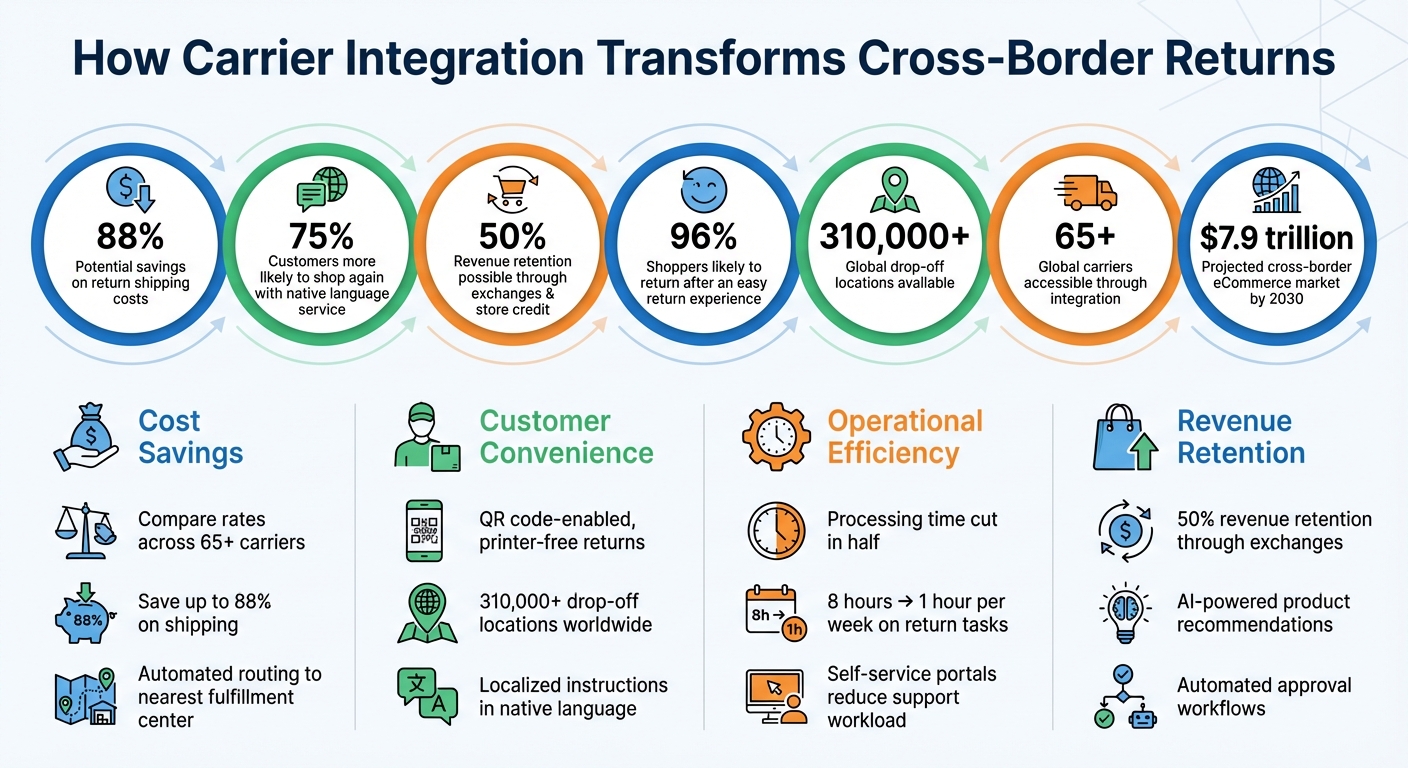
Key Benefits of Carrier Integration for Cross-Border Returns
How Carrier Integration Works for International Returns
Carrier integration simplifies the process of managing international returns by linking your Shopify store to global shipping networks through a single platform. Instead of manually handling return labels and customs paperwork for each return, the system uses key product details - like weight, HS codes, and origin - to automatically generate all required shipping documents. For example, if a customer in France initiates a return to a U.S. warehouse, the integration instantly creates the invoice, packing slip, and shipping label.
To make this work, each product variant in your Shopify store must include accurate details such as weight, origin, and HS codes. Without this information, label generation may fail, requiring you to step in manually. Once your product data is properly set up, you connect your carrier accounts (e.g., FedEx, UPS, or USPS) to the returns management system. This allows the system to access international shipping services and calculate rates. From there, the automated processes take over, streamlining label creation and routing.
Automating Label Creation and Routing
When a customer initiates a return through a self-service portal, the system determines their location and applies pre-set routing rules. These rules help select the most cost-effective carrier based on the customer’s country or region. For instance, you might configure the system to route all European returns through a regional carrier to save on transit costs, while U.S. returns are handled by USPS. The system then generates both the return label and the necessary customs documentation.
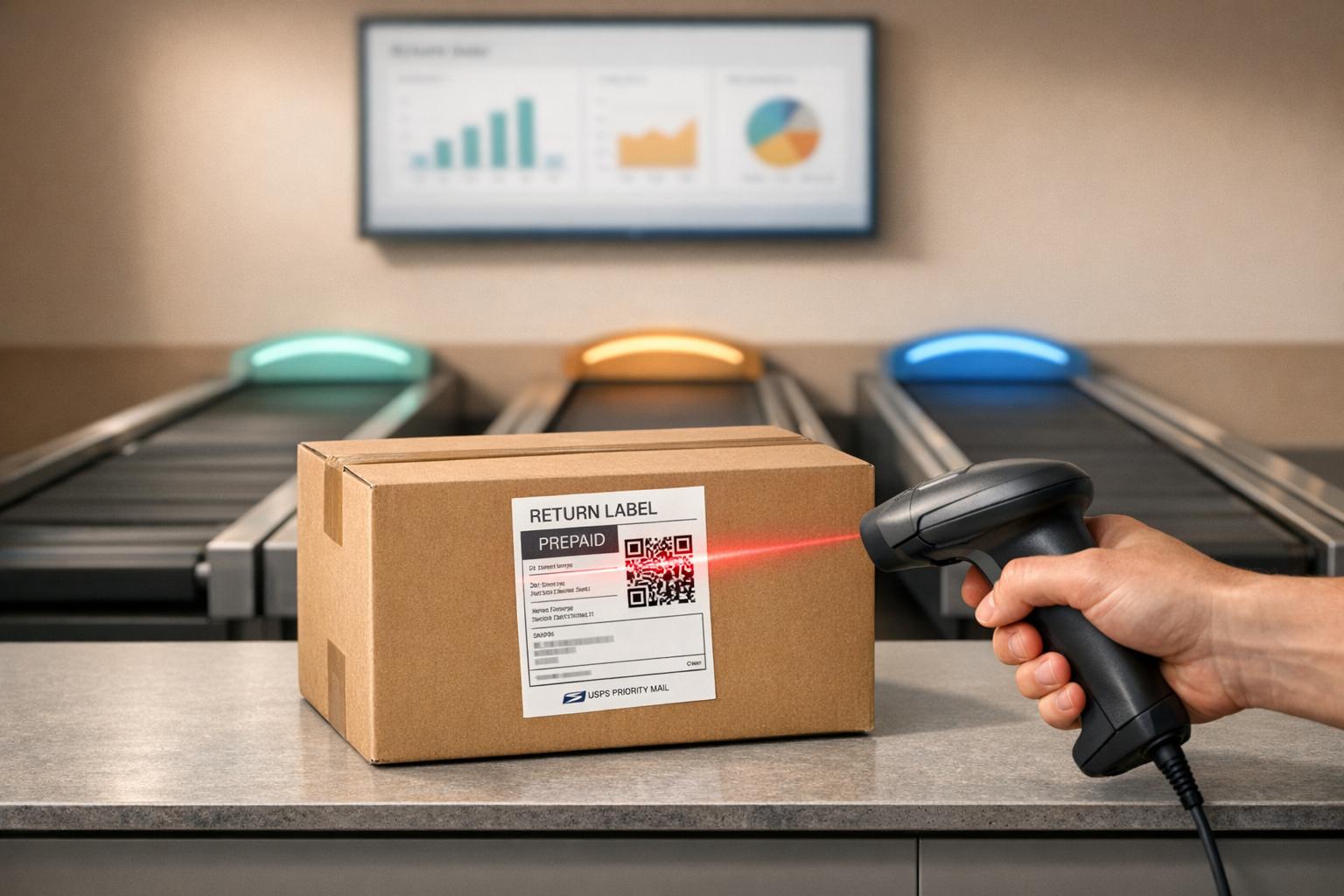
Some integrations even support QR code-enabled, printer-free returns. In this case, customers receive a QR code on their phone, which they can take to a local drop-off point - like UPS, USPS, or FedEx. The carrier scans the code and prints the label on-site. This convenience makes a big difference: studies show that 75% of customers are more likely to shop again when return instructions and customer service are provided in their native language. Additionally, automating returns processing can cut processing times in half. These efficiencies extend to global networks, which we’ll dive into next.
Accessing Global Carrier Networks
Integration platforms give merchants access to a vast network of global carriers through a single API. Instead of juggling multiple accounts with various international carriers, you gain entry to a unified system that connects to 95% of customers worldwide via over 310,000 drop-off locations. The platform compares service levels and rates across carriers, automatically choosing the best option to balance cost and delivery speed based on your preferences.
Compliance is another area where these platforms shine. Using product data, the system generates customs declarations that meet all necessary regulations, reducing the chance of delays caused by incomplete paperwork at the border. This streamlined approach not only saves time but also minimizes the headaches often associated with international shipping.
Benefits of Carrier Integration for Cross-Border Returns
Carrier integration brings clear advantages to businesses handling international returns. By connecting global carriers directly to your Shopify store, you can see improvements in three major areas: shipping costs, customer satisfaction, and operational efficiency. These gains become even more pronounced as your international sales grow.
Lower Shipping Costs
One of the biggest perks of carrier integration is the ability to cut international return costs. With access to rates from over 65 global carriers, the system automatically compares options and selects the most cost-effective choice for each return. Instead of paying retail prices, merchants benefit from pre-negotiated commercial rates, potentially saving up to 88% on shipping fees.
The savings don’t stop there. Intelligent routing rules allow you to send returns to the nearest regional fulfillment center instead of your main warehouse, slashing unnecessary shipping costs. For low-value items where return shipping isn’t worth the expense, you can implement "Green Returns", letting customers keep the item while still receiving a refund or store credit - completely cutting out shipping costs. Some businesses take it a step further by consolidating returns within a country and shipping them back in bulk every 30 or 90 days, reducing per-item transportation expenses.
Better Customer Experience
Carrier integration makes returns easier and more convenient for customers. Features like QR code-enabled, printerless returns allow shoppers to drop off packages at over 310,000 global locations without needing a printer. Automated documentation, including invoices and customs forms, simplifies the process further.
Localized instructions in the customer’s native language and refund amounts displayed in their local currency enhance trust and satisfaction. In fact, research shows that 75% of customers are more likely to buy again when service is offered in their language. These small but meaningful touches can turn a potentially frustrating return into a seamless experience.
Easier Support Team Workflows
Automation doesn’t just benefit customers - it also lightens the workload for your support team. Sarah D., Customer Service and Retention Manager at Lume, shared that automated returns management cut her team’s time spent on return-related tasks from 8 hours per week to just 1 hour.
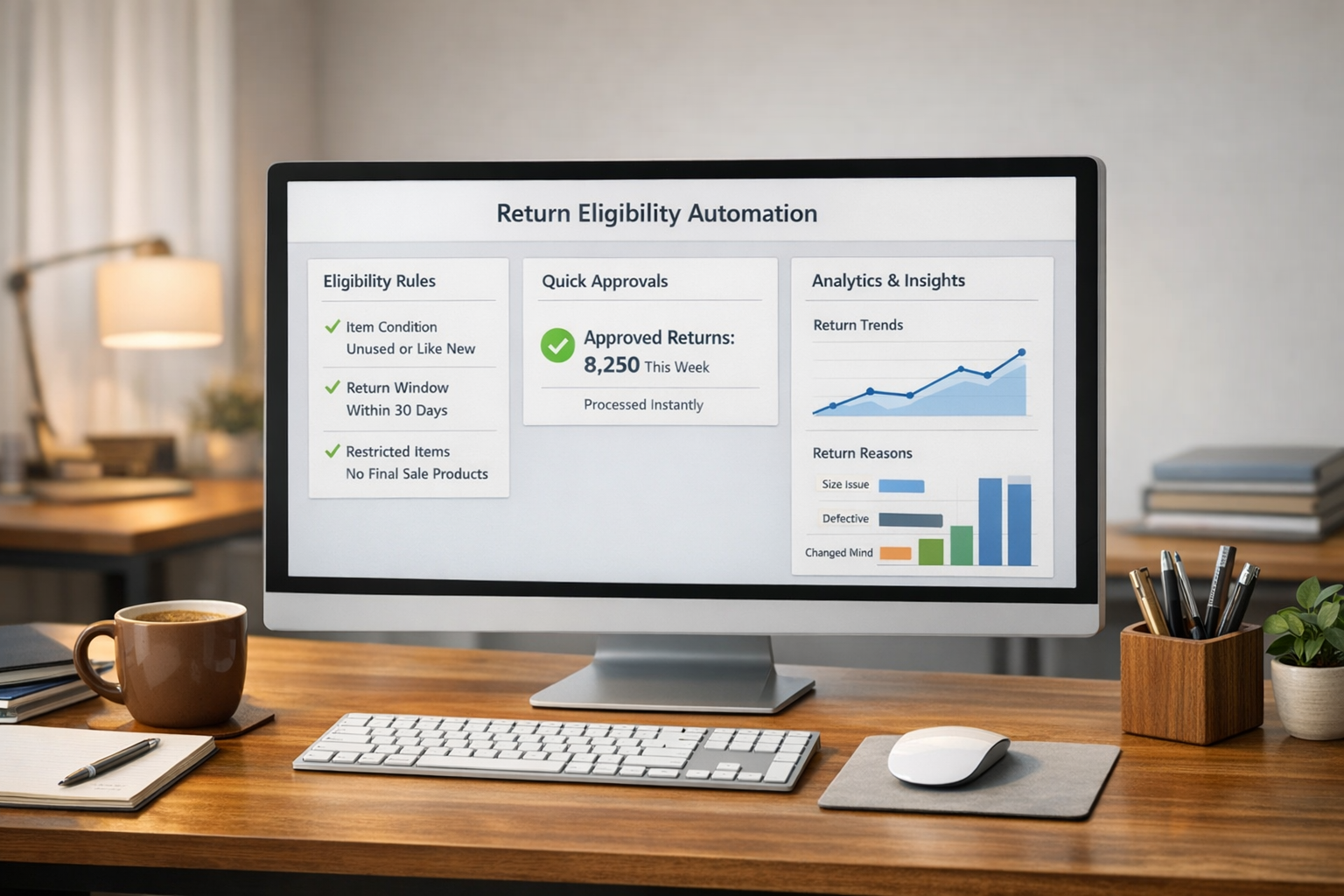
Self-service portals allow customers to handle returns themselves, from initiating the process to generating labels, without needing to contact support. Pre-set approval rules handle requests automatically based on factors like return windows, product type, or order value, eliminating the need for manual reviews. Once returns arrive at your warehouse or 3PL, the system triggers refunds or exchange orders automatically, freeing your team to focus on exceptions instead of routine tasks. These streamlined workflows make managing global returns far less labor-intensive.
Steps to Set Up Carrier Integration in Shopify

Once you understand the benefits of carrier integration, it's time to set up your Shopify returns system. This involves selecting carriers, configuring return policies, and thoroughly testing your setup to ensure everything runs smoothly.
Choosing the Right Carriers for Your Business
Selecting the right carriers is a key part of automating returns. The carriers you choose should align with your markets and shipping needs. For example, USPS covers all residential addresses in the U.S., while Canada Post offers extensive reach and dedicated returns support in Canada. Always confirm that your chosen carriers provide a "Returns" service level, not just standard shipping or tracking.
Your return policy also plays a role in carrier selection. If you offer prepaid return labels to simplify the process for customers, opt for carriers that integrate seamlessly with Shopify to automate label generation and commercial invoices. On the other hand, if your customers handle returns themselves, prioritize carriers with a broad network of drop-off points. For example, EasyPost connects to over 310,000 global drop-off locations.
If you're working with a third-party logistics (3PL) partner, you can save costs by routing returns to regional warehouses instead of shipping items across borders. As Del Mahabadi, International Marketing Manager at Psyched Wellness, shared:
"International product returns are much easier with a great fulfillment partner. Before we had a fulfillment partner, shipping products and receiving returns was a much slower process".
For low-value items where return shipping costs exceed the item's worth, you might consider offering "Green Returns." This option allows customers to keep the product while still receiving a refund or store credit, avoiding unnecessary shipping expenses.
Here’s a quick breakdown of return methods and their use cases:
| Return Method | Best Use Case | Customer Effort |
|---|---|---|
| Green Returns | Low-value items; shipping costs exceed item value | Minimal (No shipping required) |
| Ship with Label | High-value items; ensures customs compliance | Moderate (Drop-off required) |
| Customer Choice | Budget-conscious merchants; no prepaid labels | High (Customer handles logistics) |
Setting Up Return Rules and Policies
Start by researching local shipping regulations and costs, then test your return process in specific markets before expanding. Make sure all product variants have complete details like weight, origin, and HS codes for accurate customs documentation.
Design your return rules based on geography and item value. For instance, automate "Green Returns" for items under $15 where return shipping isn't cost-effective. For high-value products, offer prepaid labels with full customs support. Adjust return windows to match regional shipping times - such as extending the standard 30-day window to 45 days in areas with longer transit times.
Automation can also help retain revenue. In 2024, Marc Nolan's Director of Operations, Nikolas Callas, reported saving $125,000 in just 90 days by introducing automated exchanges, making it easier for customers to select replacements instead of refunds.
Localization is another important step. Provide return instructions in your customer's language and show refund amounts in their local currency. This small detail can make a big difference, as 75% of shoppers are more likely to return when services cater to their language preferences.
Once your rules are in place, move on to testing and launching your system.
Testing and Launching Your System
Testing is crucial to ensure your carrier integration works as expected. Start by verifying that your product data is complete. Run test returns in each country to check whether labels and customs documents are generated automatically. If you're using a 3PL or warehouse management system, test webhook integrations to confirm real-time updates when items are inspected and restocked.
Double-check that your carriers support international returns, not just domestic shipping. Conduct internal tests for returns across different regions to ensure the process works end-to-end. Make sure customers see the correct local currency and language on your return portal.
Many platforms offer trial periods to help you test risk-free. For instance, ForthRoute provides a 14-day free trial with no credit card required, giving you time to validate your setup before committing.
Finally, monitor your carrier integration's API performance during the first few weeks post-launch. Keeping an eye on uptime and addressing issues quickly ensures a smooth experience for your customers.
sbb-itb-a3e286c
Turning Returns Into Retained Revenue
Once your carrier integration is running smoothly, the next step is to focus on turning refunds into retained revenue. With the right strategies, you can hold onto as much as 50% of revenue that might otherwise slip away. Let’s dig into how you can make this happen.
Encouraging Exchanges and Store Credit
Exchanges and store credit should be at the heart of your return process. Why? Because they keep the money within your business. When customers visit your return portal, make sure exchange options are front and center - before they even see the refund option. For instance, Forthroute uses AI-powered product recommendations to suggest alternatives based on why the customer is returning the item. If someone returns a shirt for being "too small", the system might instantly suggest a larger size, converting a refund into a successful exchange.
Store credit works in a similar way. By offering instant credit, you allow customers to shop immediately without waiting for their refund to process. Some businesses sweeten the deal by offering an extra $5–$10 in store credit when customers choose this option over a cash refund.
For international returns where shipping costs could outweigh the product's value, consider adopting "Green Returns." This approach allows customers to keep the product while still receiving an exchange or store credit. It’s a win-win, avoiding expensive cross-border shipping fees.
Using Data to Control Costs
Data is your secret weapon for managing costs effectively. With carrier integration, you gain access to analytics that can pinpoint which products are driving up your return expenses. Your returns dashboard should track return rates, reasons, and shipping costs by SKU. For example, if a particular item keeps getting returned due to "poor fit" or "not as described", you can update its product listing, fine-tune sizing charts, or even consider discontinuing it altogether.
Automated routing rules can also help protect your margins. You might configure your system so refunds are only processed for higher-value items, while lower-value products default to exchanges or store credit. As PELAGIC GEAR's Senior Director of eCommerce explained:
"Putting restrictions on specific items means we don't need to jump through hoops. We can identify our products through tags and fully control our returns, especially from a cost perspective."
Automation can save you even more money by streamlining claims recovery. Carrier integrations can automatically detect lost or damaged packages and file claims with carriers like USPS, FedEx, and UPS. Surprisingly, over 40% of eligible shipping refunds go unclaimed simply because merchants don’t have the time to track them manually. Automating this process ensures you recover those funds without lifting a finger.
Conclusion
Handling cross-border returns doesn’t have to drain your revenue or overwhelm your support team. By integrating global carriers, you can automate key tasks like label creation, customs paperwork, and tracking, ensuring a smooth returns process for customers. Research shows that 96% of shoppers who experience an "easy" or "very easy" return process are likely to return to the same retailer for future purchases. Automation not only streamlines operations but also helps safeguard your profits.
The real advantage of carrier integration lies in how it supports revenue retention. Encouraging exchanges or store credit instead of refunds can help you hold on to as much as 50% of revenue that might otherwise be lost. For just $19/month, Forthroute offers tools like AI-driven product recommendations, printerless QR code returns, and automated approvals. These features reduce manual effort and turn returns into opportunities to retain revenue.
Global shoppers expect the same level of convenience as domestic ones. Providing localized instructions, instant return labels, and clear tracking details eliminates common pain points that can lead to abandoned carts or poor reviews. In fact, 75% of customers are more likely to shop again if customer service is offered in their native language. These frictionless processes work hand-in-hand with automated revenue retention strategies to keep customers coming back.
Don’t let returns eat into your bottom line. Try Forthroute with a 14-day risk-free trial and take the first step toward scaling your returns process. With the cross-border eCommerce market projected to reach $7.9 trillion by 2030, now is the time to position your business for growth.
FAQs
How does integrating carriers help lower the cost of international returns?
Integrating carriers into your Shopify store can save you money on international returns by offering discounted shipping rates tailored for cross-border logistics. This setup makes it easier to choose cost-effective shipping options while automating customs documentation to minimize errors and delays.
By simplifying these steps, carrier integration helps cut costs and creates a hassle-free experience for both your business and your customers.
What are Green Returns, and how can they benefit my business?
Green Returns focus on making the return process more environmentally friendly by minimizing its impact on the planet. This approach includes steps like consolidating shipments, using eco-friendly packaging, and partnering with logistics companies that emphasize sustainable practices.
For businesses, adopting Green Returns isn't just about helping the environment - it’s also a smart business move. It allows companies to demonstrate their dedication to sustainability, which appeals to customers who care about the planet. On top of that, streamlining logistics and cutting down on unnecessary transportation can lead to cost savings. These efforts not only align with eco-conscious values but also build stronger customer loyalty and position businesses as leaders in a market that increasingly values environmental responsibility.
How does integrating carriers improve the returns experience for customers?
Integrating carriers into your Shopify store can transform the returns process into a faster, simpler, and more customer-friendly experience. With this setup, customers can generate prepaid shipping labels in seconds, use QR codes for printerless returns, and track their packages in real time, cutting out common headaches like delays and uncertainty.
For merchants, this integration streamlines operations by automating approval rules and offering flexible return options like exchanges or store credits. By reducing manual effort and making the process seamless, it enhances the overall customer experience - building trust and loyalty along the way. Features like instant label generation and printerless returns are particularly beneficial for international shoppers, making returns hassle-free no matter where they’re located.