Retailers lose billions every year due to high return rates, but data-driven strategies can change that.
In 2024, U.S. shoppers returned $890 billion worth of merchandise - 17% of total retail sales - with online purchases seeing a 24.5% return rate. High return rates (above 20%) can erase profits, making smarter return policies essential.
Here’s what works:
- Track Return Data: Monitor reasons like sizing issues (52%) and misleading product photos (39%) to fix preventable problems.
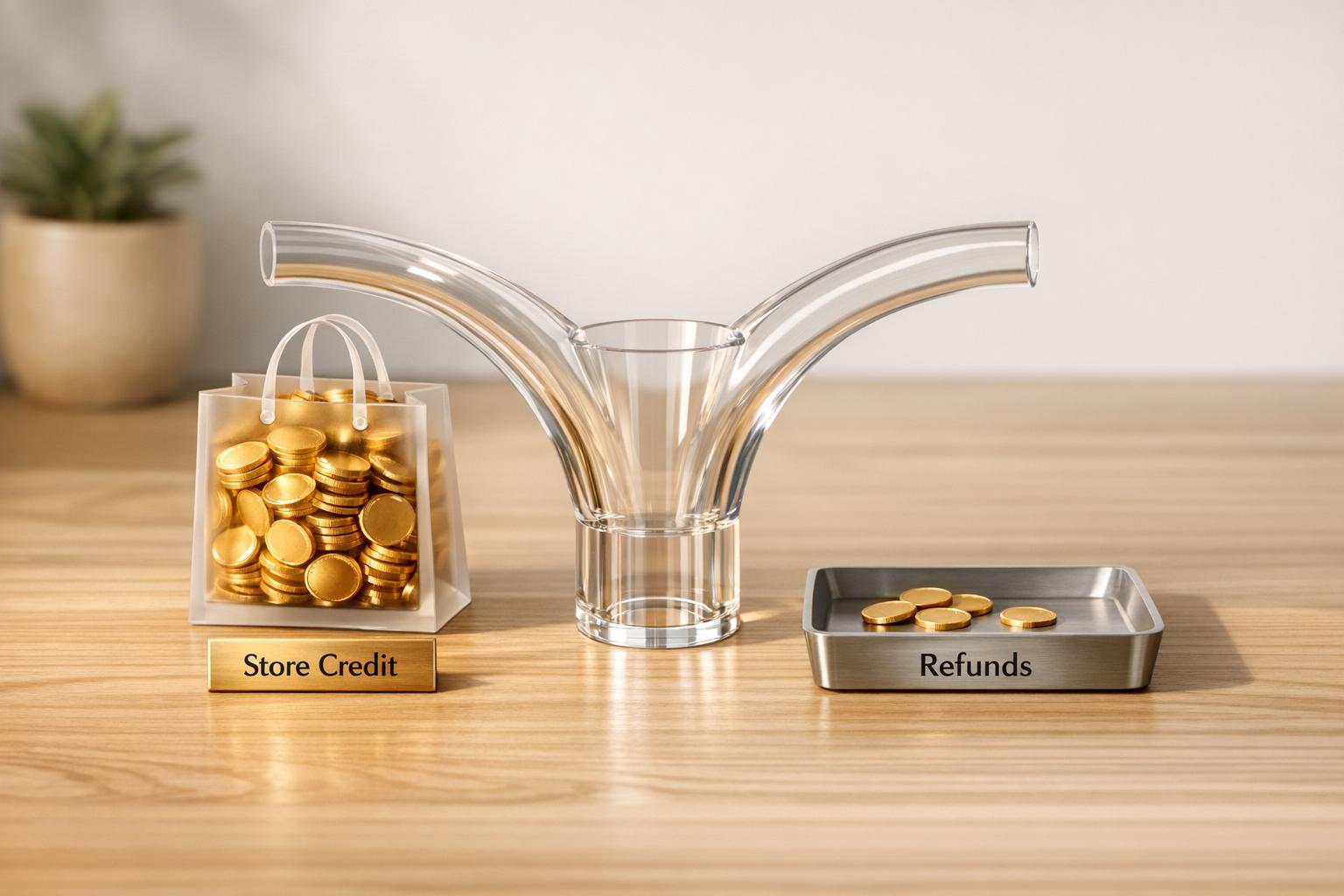
- Flexible Options Retain Revenue: Offering 3+ return options boosts revenue retention by over 30%. Exchanges and store credits are more profitable than refunds.
- Automate Returns: Use rules to approve low-risk returns and flag high-value ones for review, cutting support time by 80%.
- Leverage AI: Tools can suggest better product sizes or alternatives, reducing returns and improving customer satisfaction.
Key takeaway: A smooth, data-backed return process reduces costs, retains revenue, and builds customer trust.
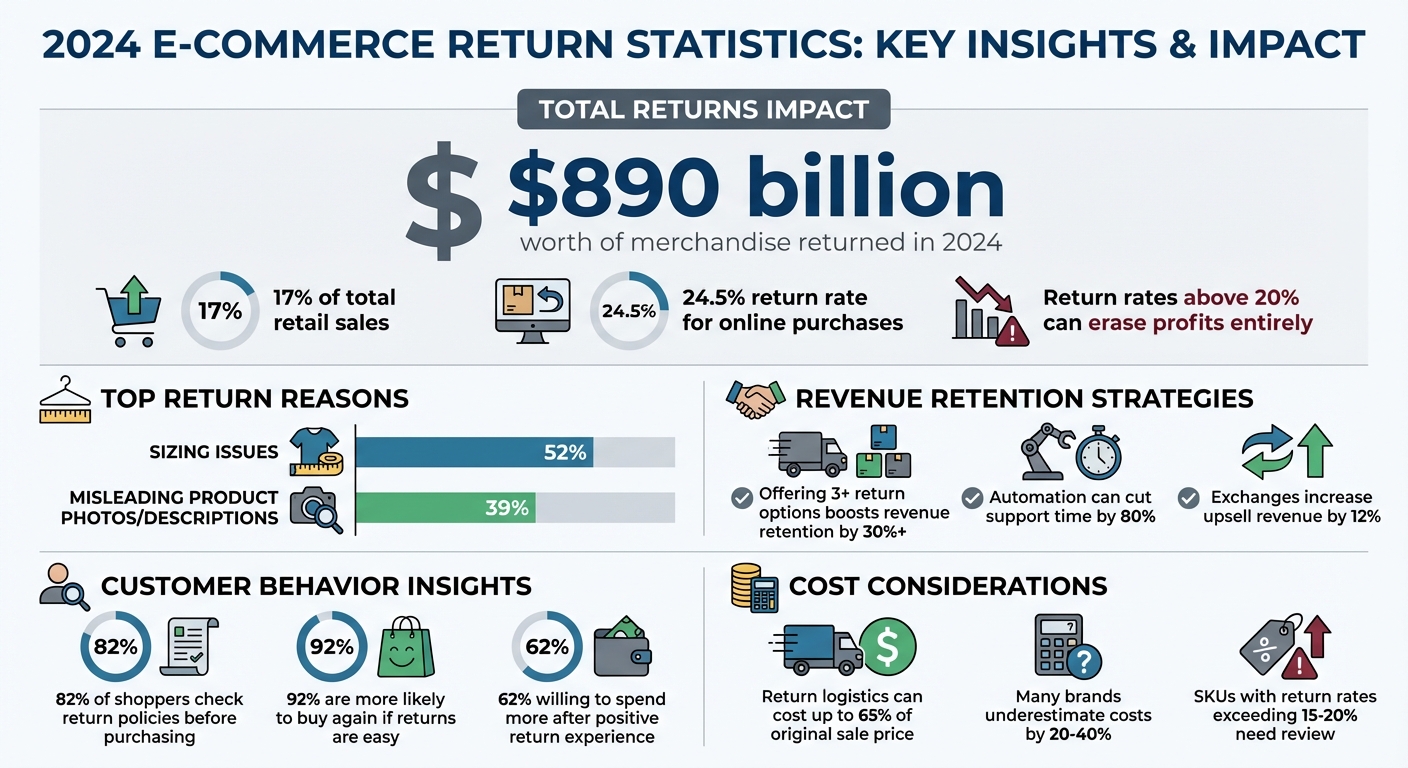
2024 E-commerce Return Statistics and Revenue Impact
Collecting and Analyzing Return Data
Digging into return data can uncover actionable insights. The right analysis helps pinpoint whether returns stem from issues like unclear sizing or misleading product photos.
What Data Should You Track?
Begin by sorting return reasons into two categories: "preventable" and "unavoidable." Preventable returns often stem from problems like sizing errors, inaccurate descriptions, or inadequate packaging. Unavoidable returns, on the other hand, include items damaged during shipping or faulty products. This separation lets you focus on what’s within your control.
Pay close attention to SKU-level performance. If a product's return rate exceeds 15–20%, it’s time for a deeper review of its product page. Common culprits include misleading photos or incorrect size charts. Tracking which items are returned most frequently helps you pinpoint and resolve these issues faster.
Customer behavior is another key area to monitor. Watch for patterns like "bracketing" (ordering multiple sizes with the intent to return most) or "serial returning" (repeated abuse of return policies). Recognizing these trends allows you to reward loyal customers while safeguarding your business against policy misuse.
Don’t overlook the "Cost per Return" - a metric that should include shipping, labor, packaging, and lost resale value. Many brands underestimate this expense by 20–40%, focusing only on carrier fees. Additionally, track "Resale Value Recovery" by grading returned items from Grade A (resale-ready) to Grade D (unsellable). This helps you measure how much value you’re recapturing from returns.
Once you’ve identified these data points, leverage analytics tools to detect trends and anomalies quickly.
Using Analytics Tools to Identify Trends
Set up automated alerts to monitor return rates. For instance, if a SKU’s return rate spikes by more than 20% in a week, it could signal a product defect or a warehouse error. These alerts allow you to act immediately.
Audit high-return SKUs regularly. Update product pages with better images or more accurate size charts to address recurring issues. As Agatha Aviso from TechnologyAdvice explains:
"If you see 'not what I expected' as a top return reason, your images - not your product - are the problem."
Take inspiration from brands like Gunner Kennels, which used Shopify’s AR toolkit in 2025 to create 3D models of their dog crates. This feature allowed customers to virtually check crate sizing next to their pets, reducing return and exchange rates by 5%.
Also, track how customers initiate returns - whether through emails, account profiles, or your website footer. This data helps refine the return process and gather better insights at the point of return initiation. These adjustments pave the way for smarter return policies and improved revenue retention.
Optimizing Return Policies Based on Data Insights
Once you've gathered and analyzed return data, it's time to refine your policies to match customer behavior. These updates can help protect your revenue while strengthening customer relationships.
Adjusting Return Windows for Customer Retention
Not all products benefit from the same return window. For example, high-value items like electronics or furniture often require longer return periods (60–90 days) to reassure buyers. On the other hand, perishables or fast-fashion items typically need shorter windows (14–30 days) to ensure they remain sellable when returned.
To avoid inventory issues, align return windows with how quickly your stock moves. Seasonal items, in particular, shouldn't have overly long return periods, as this could delay restocking and impact sales.
Holiday sales require special consideration. Since return rates spike after November and December, extending return windows to 60 or 90 days for purchases made during this time can ease the process for gift-givers and improve customer satisfaction during the busy season.
After fine-tuning return windows, consider introducing more flexible exchange options to further protect your revenue.
Creating Flexible Exchange Options
Refunds can hurt your bottom line, but exchanges help preserve revenue. Offering direct exchanges - such as allowing customers to choose a different size or color - keeps the original sale intact while addressing their needs.
For example, make size swaps easy by enabling customers to select a new size directly in your return portal. This reduces friction and ensures the transaction remains smooth.
When presenting return options, consider making exchanges or store credit the default choice instead of refunds. Store credit, paired with a small incentive, can be a powerful tool. For instance, offer the full refund amount as a gift card and add a 10–15% discount if it's used within 24 hours. This turns a potential loss into a new sale.
For low-cost items where shipping costs outweigh the item's value, returnless refunds can be a smart alternative. This approach - ideal for products priced under $10–$15 - keeps customers happy without incurring high logistics costs.
| Return Option | Revenue Impact | Satisfaction | Best Use Case |
|---|---|---|---|
| Variant Exchange | Retains 100% of the original sale | High | Sizing or color mismatches |
| Store Credit | Keeps funds within your ecosystem | Moderate to High | When the exact item isn't wanted |
| Full Refund | Results in a complete loss | High | Defective or mis-shipped items |
| Returnless Refund | Loses item value | Very High | Low-value items under $15 |
Automating Return Processes with Smart Rules
Handling returns manually not only eats up valuable support time but also leads to inconsistent policy enforcement. Automation solves both problems by applying rules uniformly and freeing up your team to focus on more complex cases that genuinely require human judgment.
By setting up automated rules, you can streamline routine decisions. For instance, you can automatically approve low-value, standard items returned within your policy window while rejecting requests for final sale items or those submitted past the deadline. This method can reduce the time support teams spend on return management by as much as 80%.
Setting Automated Approval Rules
The key to effective automation lies in identifying low-risk return requests. Retailer Evereve provides a great example of this approach. By integrating Magento with Zendesk, they automated return approvals, significantly reducing their support ticket volume and improving efficiency. Ideal candidates for auto-approval include low-value items, standard exchanges within your return window, and requests from customers with a clean return history.
For higher-value orders - like those over $500 - you can configure your system to flag these for manual review or send alerts to your team through Slack or email. This layered strategy helps you minimize fraud risks while still automating the bulk of routine tasks.
Another smart tactic is using returnless refunds for low-value items, such as those under $15, when shipping costs exceed the item's resale value. This "green returns" approach can slash reverse logistics costs by up to 65%.
| Automation Rule Type | Criteria for Action | Business Benefit |
|---|---|---|
| Auto-Approval | Low-value, standard items within window | Saves time; boosts customer satisfaction |
| Auto-Rejection | Final sale items; outside return window | Enforces policies; prevents revenue loss |
| Fraud Detection | Serial returners; mismatched receipts | Limits return abuse and protects revenue |
| Returnless Refund | Items under $15 where shipping > value | Cuts logistics costs |
Once you've set up these rules, AI tools can take your return process to the next level.
Streamlining Exchanges with AI Suggestions
Beyond automating approvals, AI-powered tools can make exchanges even smoother. For example, if a customer selects "too small" as their return reason, your system can instantly recommend the next size up based on real-time inventory availability.
Andie Swim successfully implemented this strategy using Wair, an AI-driven fit tool on their product pages. The tool achieved a 40% shopper adoption rate and reduced return rates by 30% by helping customers pick the right size initially or during the exchange process.
You can also encourage exchanges over refunds by offering incentives like bonus store credit. This not only reduces potential losses but also turns returns into opportunities for new sales.
sbb-itb-a3e286c
Measuring the Impact of Return Policies
Once you've automated return workflows and fine-tuned your policies using data, the next step is figuring out how well they're working. Are they helping you hold onto revenue? Are customers happier? Or are you losing money on reverse logistics? The right metrics can give you a clear answer by showing how your updated policies affect both your bottom line and customer satisfaction.
Key Metrics to Monitor
Start with your return rate - this is your baseline metric. It measures the percentage of orders that are returned. Keeping an eye on this number helps you catch issues early. For example, a return rate over 20% can erase a retailer's operating profit entirely. Monitoring it monthly allows you to spot trends, like sudden spikes that might point to product quality problems or unclear descriptions.
Next, look at your exchange rate and revenue retention percentage. These numbers tell you how effective you are at turning refunds into exchanges or store credits. The higher these rates, the more money stays within your business.
Another key metric is cost per return, which includes shipping, labor, restocking, and other logistics. Returns can eat up as much as 65% of a product's sale price. For lower-priced items, the cost of processing a return might even exceed the product's value - making returnless refunds a smarter choice in some cases.
Finally, track return reason trends to identify recurring issues. For instance, sizing problems account for 52% of all retail returns, while 39% of online shoppers send items back because they don’t match the product images. Knowing why customers return items can help you address the root causes.
Using Dashboards for Real-Time Insights
To stay on top of these metrics, use real-time dashboards that consolidate all your sales and return data. These dashboards provide a complete, up-to-date view across all your sales channels, saving you from manually piecing together data.
Dashboards can also help you spot problems quickly. For example, if final-sale items are being returned due to system errors or inconsistent enforcement, you’ll catch it right away. You can also break down data by channel, product category, or location to zero in on specific issues. If one product has a 30% return rate while others hover around 10%, you know exactly where to focus your efforts.
Dashboards are also great for managing serial returners. You can set automated rules for high-risk accounts, like limiting them to exchanges instead of refunds. Plus, you can measure the financial impact of policy changes - like extending your return window from 30 to 60 days - by comparing return rates and customer acquisition data before and after the adjustment. The goal is to use the data your dashboard provides to make informed tweaks, rather than relying on guesswork.
Integrating Forthroute for Returns Management
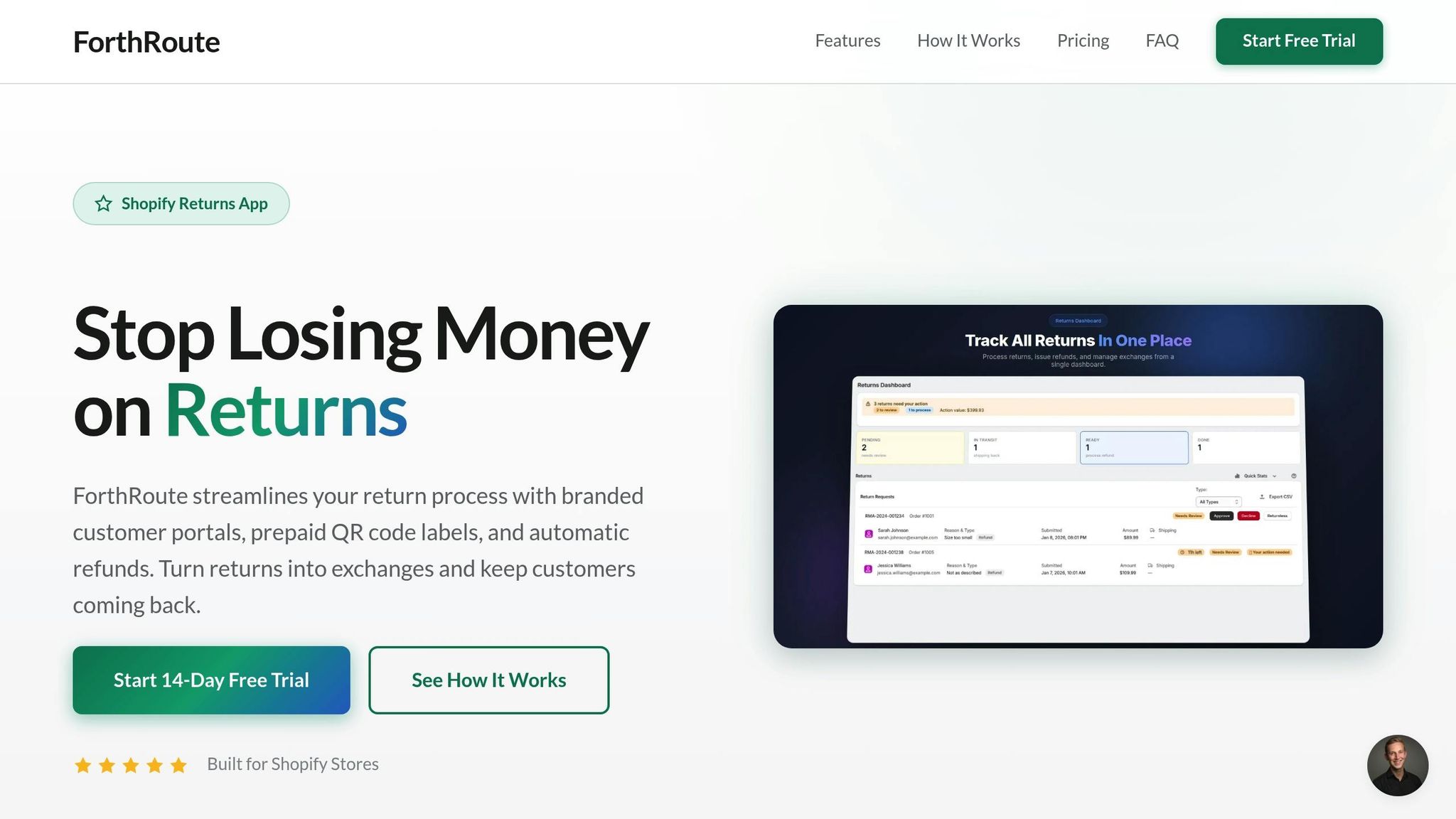
After identifying key metrics and setting up dashboards, the next step is making that data actionable. For Shopify merchants, integrating a returns management app like Forthroute helps transform insights into automated workflows, simplifying returns and improving efficiency.
Automating Returns with Forthroute
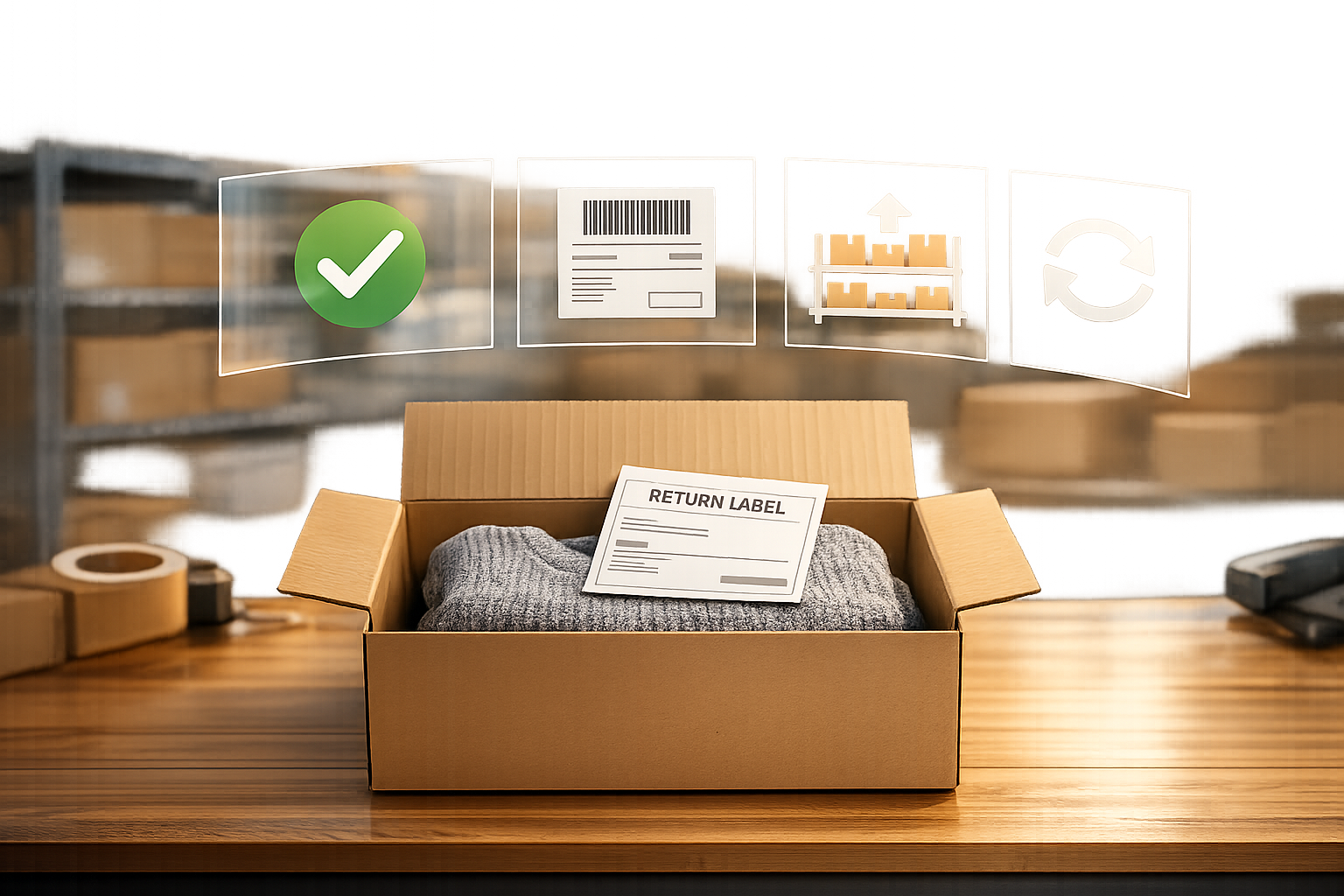
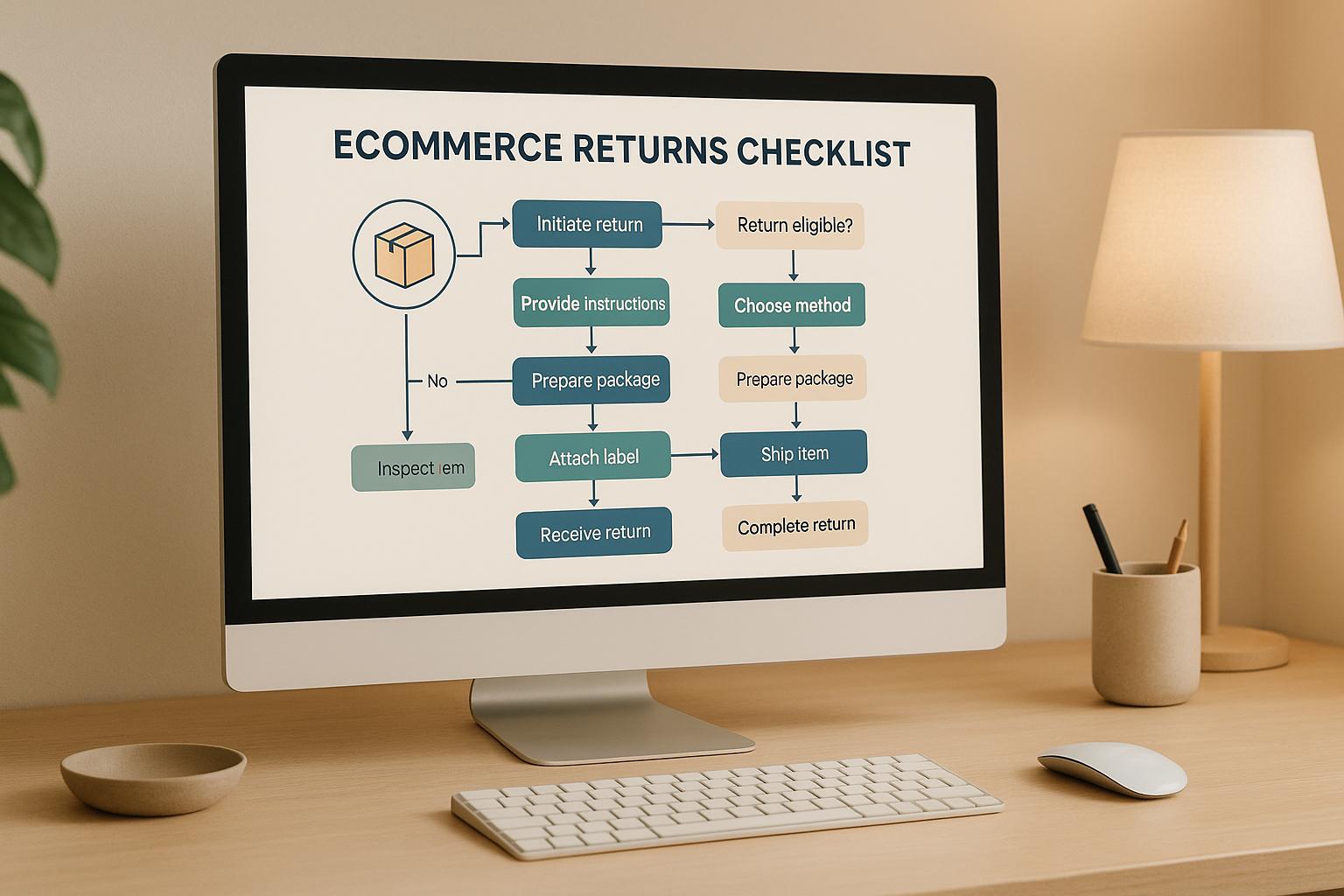
Forthroute eliminates the hassle of manual email exchanges by offering a self-service portal that customers can access directly from your store’s footer or transactional emails. The process is straightforward: customers input their order number and email, select the items they want to return, provide a reason, and choose their preferred resolution - whether it’s a refund, exchange, or store credit. If the request meets your pre-set approval rules, the customer instantly receives a prepaid shipping label.
The standout feature here is smart automation rules. These rules handle low-risk approvals automatically, saving your support team from manually reviewing every request. This is particularly important since 82% of online shoppers check your return policy before making a purchase. By streamlining approvals, you not only speed up the returns process but also cut down on labor costs - a big win given the high return rates common in e-commerce. This integration directly ties into your earlier data-driven strategies, using insights to drive operational efficiency.
Boosting Customer Loyalty with Better Post-Purchase Experiences
Automation is just the beginning. A smooth post-purchase experience can turn one-time buyers into loyal customers. Statistics show that 92% of shoppers are more likely to buy again if the return process is easy, and 62% are willing to spend more after a positive return experience. Forthroute enhances this experience with printerless QR code returns. Customers simply show a QR code on their phone at a UPS or USPS drop-off location, where the carrier prints the label for them - no printer needed. This feature is especially convenient for mobile shoppers, removing a common pain point.
The app also supports instant exchanges, allowing customers to swap items for different sizes or colors without waiting for a refund. Merchants offering exchanges instead of refunds often see upsell revenue grow by nearly 12%. Additionally, businesses providing multiple return options - like in-store returns, drop-off points, and at-home pickups - report a 30% increase in revenue retention rates.
"Businesses retain more revenue when they offer more flexible returns options"
- Philip Manzano, AfterShip.
Maximizing Revenue Retention with AI-Powered Suggestions
Refunds can drain cash flow, but exchanges and store credit keep money within your business. Forthroute’s interface prioritizes these options, helping merchants retain revenue. The app’s AI-powered suggestions recommend alternative products based on the customer’s return reason and real-time inventory. For instance, if someone returns a shirt for being "Too small", the system might suggest the next size up.
This approach tackles a major issue: 52% of all returns are due to sizing problems. Offering an instant exchange for the correct size can turn what would’ve been a refund into a retained sale. Considering that return logistics can cost up to 65% of the original sale price, keeping the transaction alive through an exchange is far more profitable than issuing a refund and hoping the customer returns later. This strategy ties back to using data to refine your policies, ensuring that every return interaction helps preserve your revenue.
Conclusion
A well-thought-out return policy, backed by data, benefits both customers and businesses by reducing friction and safeguarding revenue. Studies reveal that 82% of shoppers review return policies, and 92% are more likely to repurchase when the return process is simple.
Striking the right balance between leniency and profitability is key. Data can help refine product descriptions, streamline return methods, and implement automated approvals that protect revenue. Automation efficiently manages routine approvals, freeing your team to focus on more complex cases. Encouraging exchanges - using tools like AI-powered suggestions for size or color adjustments - can minimize the revenue loss from full refunds. This approach aligns seamlessly with modern returns management solutions.
For Shopify merchants, tools like Forthroute turn returns into an opportunity for retention. Features like self-service portals, smart rules, and AI-driven exchange options help offset the staggering $890 billion in merchandise returned in 2024. Prioritizing exchanges and store credit directly supports profitability.
FAQs
How can tracking return data help lower return rates?
Tracking return data offers businesses an opportunity to tackle return rates head-on by revealing patterns and pinpointing why returns happen in the first place. Whether it's product defects, sizing issues, or unclear descriptions, analyzing these trends allows businesses to make specific changes that address these problems and cut down on future returns.
Return data doesn't just stop at identifying problems - it also helps streamline operations. For example, merchants can use this information to fine-tune return policies or automate processes, like setting clear eligibility rules. This speeds up approvals and creates a smoother experience for customers, which can lead to higher satisfaction. Plus, these insights can drive proactive changes, such as refining size charts or offering tailored product recommendations. These steps not only reduce return rates but also help build stronger customer loyalty over time.
What are the advantages of offering flexible return options?
Flexible return options bring plenty of perks for both businesses and their customers. For shoppers, a simple and hassle-free return process can boost satisfaction and loyalty. When returning items is easy, people are much more likely to shop with you again, leading to repeat purchases and a stronger sense of trust in your brand.
For businesses, offering choices like in-store returns, drop-off points, or even printerless returns can help streamline operations. These options reduce manual tasks, saving time and resources. Plus, flexible policies can keep revenue within the business by encouraging exchanges or store credit over refunds. Automating return approvals and processes not only improves efficiency but also helps cut down on fraud risks. In the end, flexible return policies create a win-win: happier customers and smoother business growth.
How does automation make the returns process more efficient?
Automation makes the returns process quicker and more efficient by instantly checking if a return meets the requirements - no need for manual reviews. This cuts down on mistakes and speeds up approvals, creating a smoother experience for both customers and support teams.
Self-service portals and automated workflows let customers handle returns on their own. They can start a return, get a shipping label, or pick an exchange option in just seconds. This not only saves time but also reduces operational costs by taking repetitive tasks off your team’s plate.