Handling in-store returns can be a headache for retailers, but the right tools can simplify the process, save time, and improve customer satisfaction. This article highlights three top return management solutions designed to integrate seamlessly with POS systems and streamline operations for brick-and-mortar stores.
Key Takeaways:
- ForthRoute: Ideal for Shopify merchants, offering QR code returns, real-time inventory updates, and a focus on exchanges over refunds. Pricing starts at $19/month plus $1.50 per label.
- Loop (formerly Returnly): Built for multi-channel operations, it syncs inventory in real-time and simplifies BORIS and BISRIS returns with QR workflows. Pricing is custom.
- Happy Returns: Offers a network of 8,000 Return Bar locations, label-free returns, and fraud prevention features. Pricing starts at $500/month plus per-item fees.
Why These Tools Matter:
- Reduce manual data entry and long wait times.
- Automate inventory updates and fraud checks.
- Improve the customer experience with faster returns and exchange options.
- Help retailers retain revenue through store credits and product suggestions.
Each solution has unique strengths, so choosing the right one depends on your store's platform, volume, and budget.
1. ForthRoute
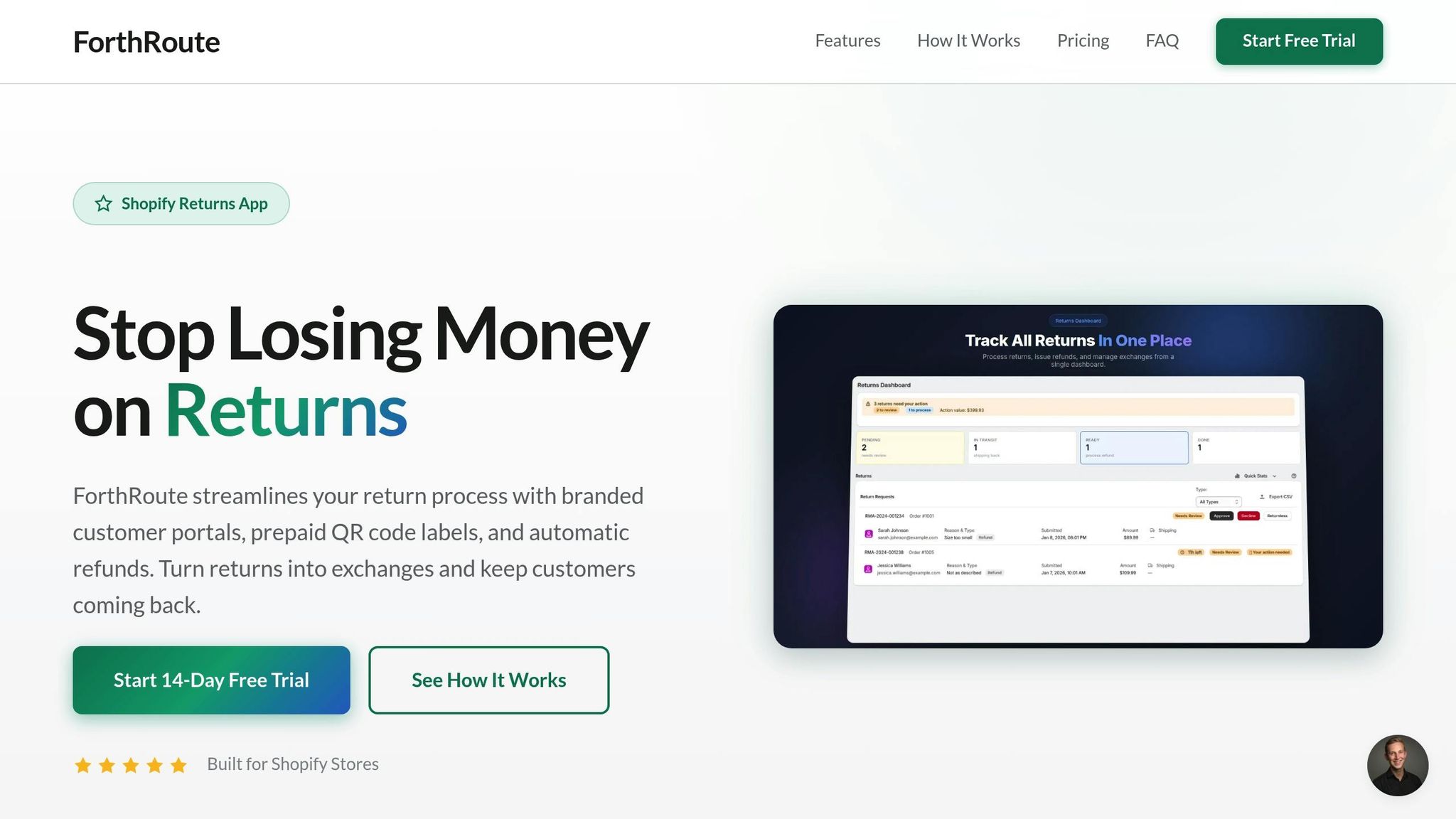
ForthRoute is a returns management platform tailored for Shopify that simplifies in-store returns for brick-and-mortar retailers. By connecting directly to your Shopify store, it creates a unified system that syncs inventory and customer data across online and physical locations. This integration helps avoid common issues like stockouts or backroom chaos caused by outdated POS systems. With ForthRoute, your returns process becomes smoother and more efficient.
POS Integration
ForthRoute seamlessly integrates with Shopify to manage inventory and sales data across all channels. When a customer initiates a return online and selects the in-store option, the system automatically generates a QR code and sends it via email. Store associates can scan this code to instantly access order details, linking returns to customer records and original receipts. This ensures customers are refunded the exact amount they paid, reducing disputes and fostering trust. By automating these steps, ForthRoute streamlines the entire return process.
Automation Features
The platform takes automation to the next level. Customers can initiate returns through a self-service portal by entering their order number and email. Predefined rules, such as auto-approving returns under $50 or rejecting final sale items, handle approvals automatically. Once a return is approved, inventory records update in real time, and notifications can be sent to your warehouse or 3PL services via webhook integrations. For in-store returns, simply scanning a receipt barcode allows staff to locate items quickly, cutting down on wait times.
Customer Experience
ForthRoute’s QR code system makes in-store returns faster and more convenient. The printerless system eliminates the need for physical paperwork, reducing hassle at the counter. Customers also receive automated updates throughout the return process, ensuring they’re informed every step of the way. By minimizing manual tasks, store associates can focus on delivering personalized service, enhancing the overall shopping experience.
Revenue Retention
ForthRoute doesn’t just simplify returns - it also helps you keep revenue within your business. By offering Store Credit as a repayment option, it encourages customers to apply the credit toward future purchases. The platform’s interface prioritizes store credit and exchanges over refunds, and its AI-powered recommendations suggest alternative products based on return reasons. For instance, if a customer returns an item for being "Too small", the system might recommend a larger size. This strategy turns potential refunds into exchanges, protecting your bottom line while keeping customers happy.
sbb-itb-a3e286c
2. Returnly
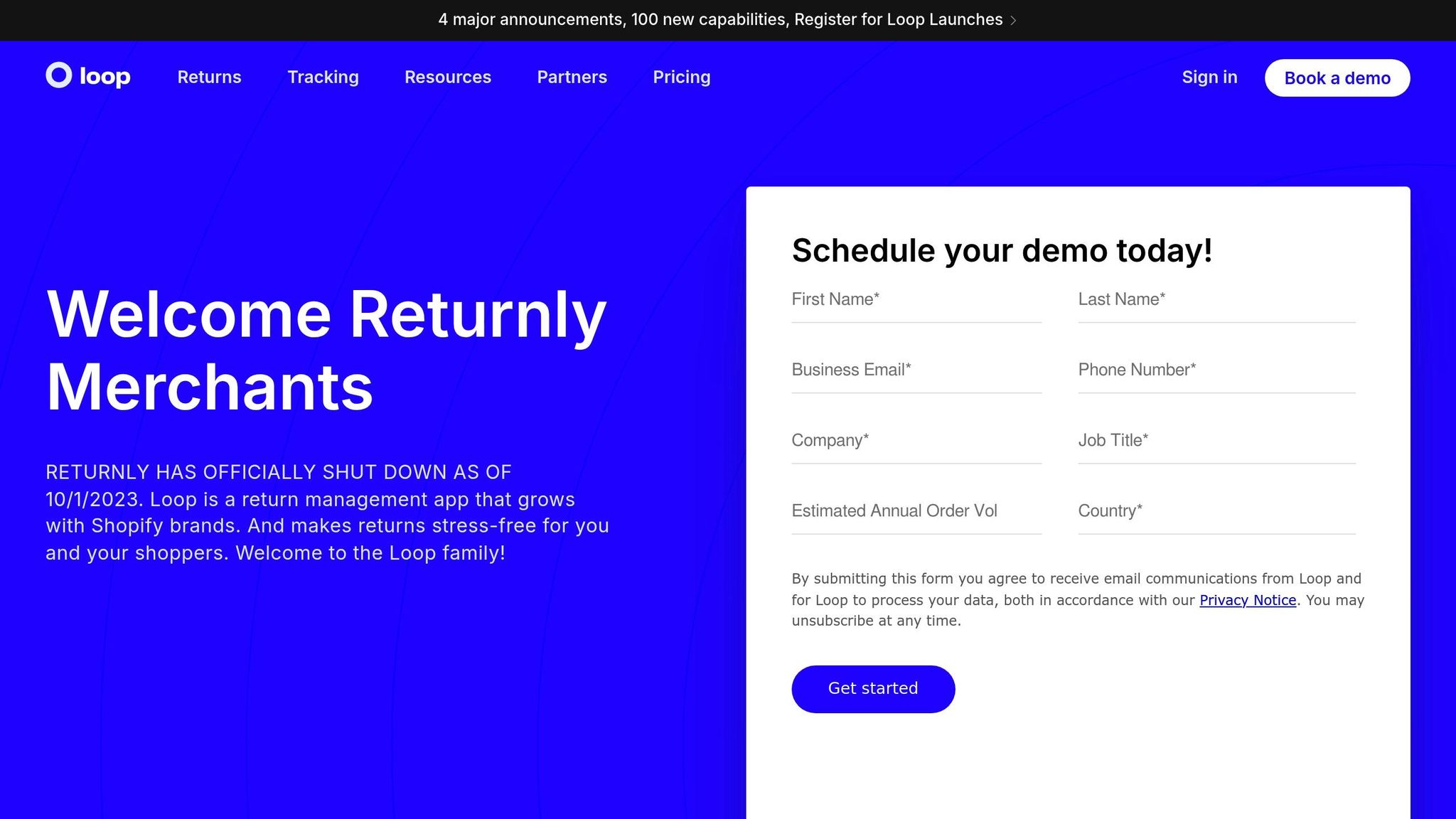
Returnly officially ceased operations on October 1, 2023, with its merchants transitioning to Loop Returns through a partnership with Affirm. The technology that powered Returnly now forms the backbone of Loop's integrated point-of-sale (POS) ecosystem. Below, we’ll explore the key elements of this solution, focusing on POS integration, automation, and customer experience.
POS Integration
Returnly previously played a key role in connecting online and offline returns. Today, Loop POS - built on Returnly's technology - seamlessly integrates with Shopify, allowing retailers to handle both BORIS (Buy Online, Return In Store) and BISRIS (Buy In Store, Return In Store) transactions within a single system. This setup keeps inventory and customer data synchronized across all sales channels, cutting down wait times and improving operational efficiency for physical stores.
Automation Features
With Loop, customers can initiate returns online and finalize them in-store using QR code workflows. These QR codes automatically retrieve order details and update inventory records in real-time. This process reduces the workload for store associates by eliminating manual data entry while ensuring inventory accuracy.
Customer Experience
Loop's system is designed with omnichannel convenience in mind. Shoppers can begin their return online and select the "Bring to our store" option. This pre-captures return data, allowing customers to skip long waits at the counter. By enabling shoppers to control when and how they complete their returns, this digital-first approach enhances the overall in-store experience.
3. Happy Returns
Happy Returns combines in-store returns with a network of 8,000 nationwide Return Bar locations. It integrates seamlessly with platforms like Shopify, BigCommerce, and Magento, while also offering a Merchant API for retailers using custom POS systems. By addressing common challenges in the returns process, it simplifies operations and ensures inventory data stays up-to-date. This allows retailers to handle returns for both online and in-store purchases without needing to overhaul their existing checkout systems.
POS Integration
With the Returnista app, store associates can process returns effortlessly. By scanning a QR code - compatible with Apple Wallet - they gain instant access to order details. The system also scans barcodes for verification and uses AI-powered photography to identify items without tags. This eliminates the need for manual data entry and ensures inventory accuracy.
This level of integration lays the groundwork for automating much of the return process.
Automation Features
Happy Returns automates key steps in the return workflow. Scanning items triggers instant refund authorization, while AI-driven risk scoring and "Return Vision" audits flag potentially fraudulent returns. For example, in 2022, apparel brand Pact saw a 34% faster restocking process and reduced customer service inquiries related to returns by 80% using these features.
Customer Experience
Returns through Happy Returns are quick - taking less than a minute - and require no boxes or labels. Customers can complete returns at a retailer's location or any Return Bar. The platform boasts a 93 Net Promoter Score and an 87% shopper adoption rate for its Return Bar network. Footwear company Cariuma, for instance, noted that 87% of its customers preferred using Return Bar locations, which helped drive a 20% increase in customer lifetime value in 2021.
By enhancing the return experience, Happy Returns also helps retailers retain revenue through innovative exchange options.
Revenue Retention
Happy Returns offers features like "One-click exchanges" and "Return Shopping" to maximize revenue retention, achieving up to a 50% boost. This strategy saved Nogin nearly $1 million and reduced customer service costs by $500,000 in 2024. Anh Vu-Lieberman, Vice President of Conversion Rate and Site Optimization at Nogin, highlighted the impact:
"We've saved nearly $1 million for our clients in the first year, thanks to revenue retention via exchanges and $500,000 in reduced customer service costs."
Comparison: Strengths and Weaknesses
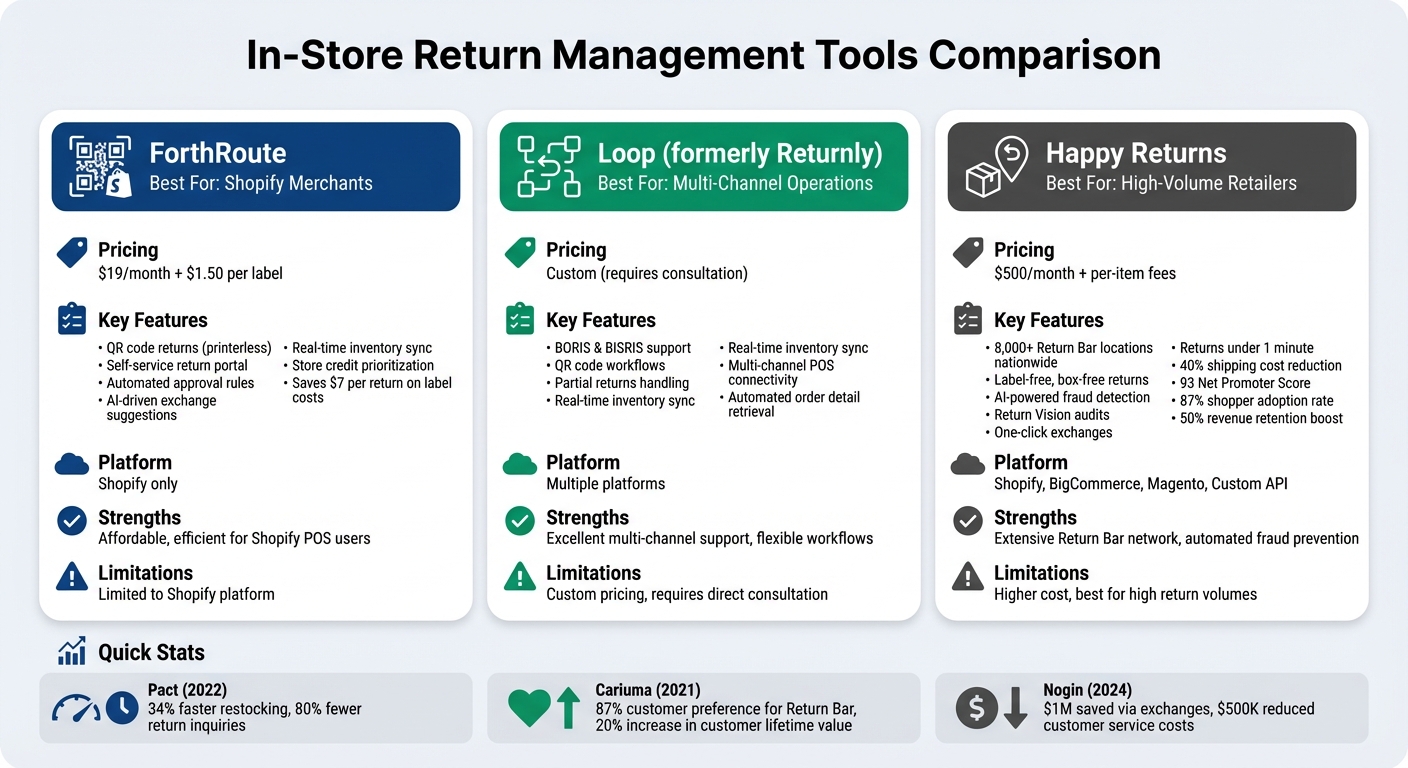
Comparison of Top 3 In-Store Return Management Tools for Retail
Here’s a closer look at how these solutions stack up, focusing on their key strengths and limitations.
Each tool integrates automation, POS compatibility, and revenue retention to tackle in-store returns. These features aim to resolve the inventory and customer service challenges discussed earlier.
ForthRoute stands out for Shopify merchants, offering a self-service return portal, automated approval rules, and AI-driven exchange suggestions that encourage swapping items instead of issuing refunds. At $19/month plus $1.50 per label transaction, it’s precise and efficient but limited to Shopify users.
Returnly shines in multi-channel operations, handling partial returns and syncing inventory in real-time. However, its pricing and setup are customized, requiring direct consultation to determine costs and implementation.
Happy Returns boasts a network of over 8,000 Return Bar locations across the U.S.. Its label-free, box-free system cuts shipping expenses by up to 40%, while automating fraud prevention and item verification. Starting at $500/month plus per-item fees, it’s best suited for retailers handling high return volumes.
While all three solutions feature strong POS integration, their platform compatibility varies. ForthRoute is exclusive to Shopify, Happy Returns supports multiple e-commerce platforms, and Returnly excels in multi-channel POS connectivity.
When it comes to automation, ForthRoute’s rules engine reduces manual workload by approving eligible returns and suggesting exchanges automatically. Happy Returns simplifies in-store workflows with automated fraud checks and item verification, while Returnly handles complex return scenarios with flexible workflows.
For customer convenience, both ForthRoute and Happy Returns offer standout features. ForthRoute allows printerless QR code returns and provides instant store credit, making the process quick and easy. Happy Returns, on the other hand, offers an effortless in-store experience with its label-free, box-free return system, which customers find especially hassle-free.
Conclusion
Selecting the best in-store return management tool comes down to factors like your store's size, platform, and budget. For Shopify POS users running brick-and-mortar stores, ForthRoute stands out as an affordable and efficient choice at $19/month plus $1.50 per label. It simplifies the return process by cutting down processing times and lowering per-return label costs, helping Shopify retailers restock inventory faster while keeping operational expenses in check. With features like a branded self-service portal and a focus on exchanges over refunds, it saves an average of $7 per return on label costs. Plus, printerless QR code returns speed up restocking, making the entire process seamless and boosting the customer experience.
ForthRoute tackles the common pain points of unsynced returns and high costs by integrating directly with Shopify. By automating tedious tasks and promoting exchanges, it turns the hassle of returns into an opportunity to protect profits and build stronger customer loyalty.
FAQs
How fast can I set up in-store QR code returns?
Setting up in-store QR code returns is a fast and straightforward process, often taking less than a day. It involves creating QR codes that include return details, allowing customers to skip printed labels entirely. After the software is installed and configured, the setup time largely depends on how compatible the system is and how quickly staff can get up to speed. In most cases, the entire process can be completed in just minutes or a few hours.
Will returns automatically update inventory at every location?
Yes, using return management tools with real-time inventory updates can automatically adjust stock levels across all locations. These tools are designed to maintain accurate inventory counts and simplify the entire return process, ensuring efficiency and consistency in managing stock.
How can I push more exchanges instead of refunds?
If you want to steer customers toward exchanges instead of refunds, focus on making the process as smooth and appealing as possible. Start by using return management tools that integrate with your POS system. These tools can help streamline the entire exchange process.
You can also sweeten the deal by offering perks for exchanges, like bonus store credit or exclusive discounts. Little incentives like these can nudge customers in the right direction.
To reduce any hassle, implement features like self-service portals, QR code drop-off options, or clear and easy-to-understand policies. These tools not only speed up the process but also make exchanges feel more convenient and customer-friendly.