Looking for a way to streamline returns for your Shopify store? Here's a breakdown of two popular options: Loop Returns and ForthRoute.
- Loop Returns: A feature-rich platform designed for high-volume stores. Plans start at $59/month and go up to $375/month, offering tools like instant exchanges, bonus credits, and fraud detection. It helps retain up to 80% of potentially lost revenue but may feel expensive for smaller businesses.
- ForthRoute: A free alternative focused on essential automation like QR code labels, exchange suggestions, and store credit options. It's quick to set up and ideal for budget-conscious merchants but lacks advanced tools for scaling.
Quick Comparison
| Feature | Loop Returns | ForthRoute |
|---|---|---|
| Pricing | $59–$375/month + usage fees | Free |
| Best For | High-volume Shopify stores | Smaller, budget-friendly stores |
| Revenue Retention | Advanced tools (Shop Now, Bonus Credits) | Basic (exchange/store credit) |
| Setup | Learning curve | Under 5 minutes, no coding |
Both platforms cater to different business needs. Choose Loop Returns for advanced features and scalability or ForthRoute for a no-cost, straightforward solution.
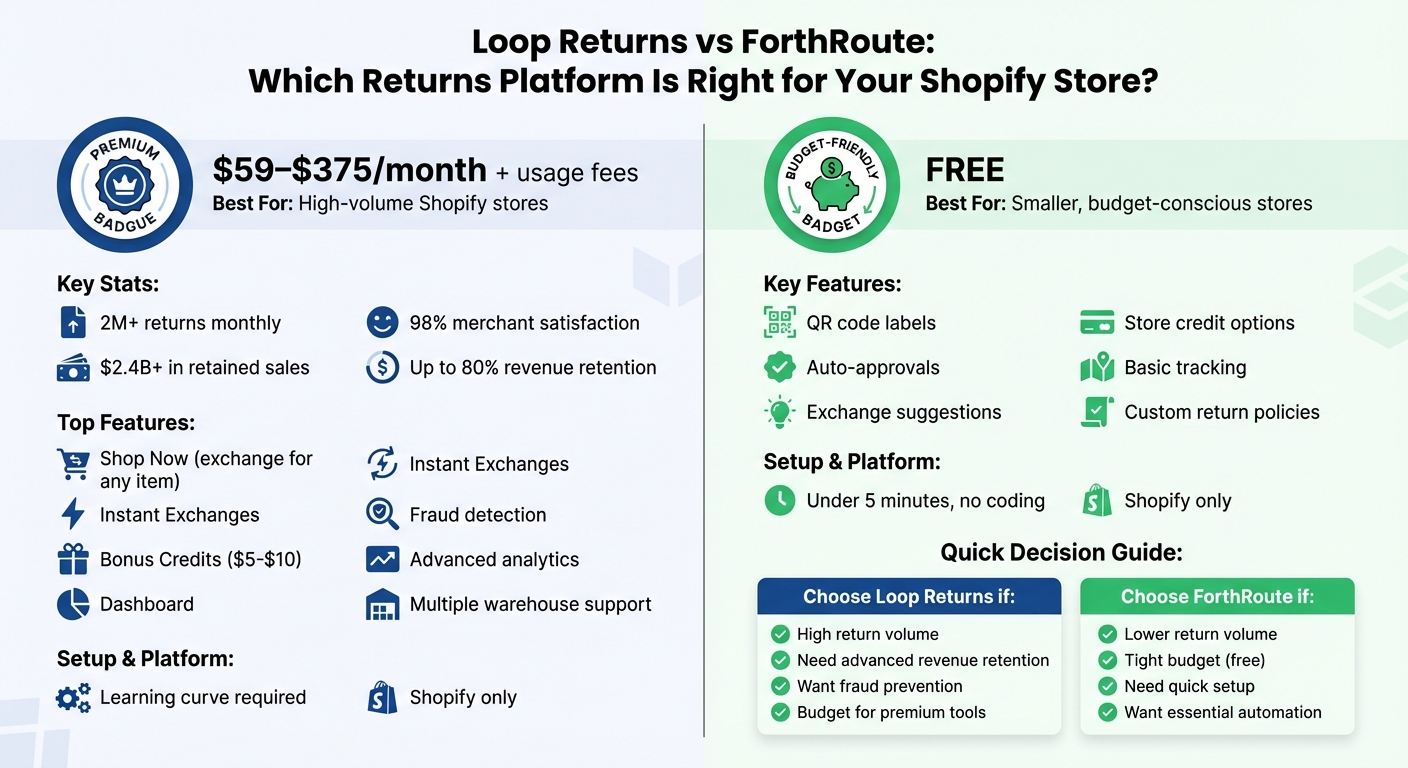
Loop Returns vs ForthRoute: Feature and Pricing Comparison for Shopify Stores
Shopify Returns and Exchange Apps

sbb-itb-a3e286c
1. Loop Returns
Loop Returns is a Shopify-native platform designed to simplify returns management for ecommerce businesses. It integrates directly with Shopify, ensuring real-time synchronization of sales, inventory, and returns data. This tight integration eliminates the hassle of complex setups or mismatched data, making it a reliable tool for streamlining post-purchase workflows.
Pricing
Loop Returns offers five pricing plans to suit businesses of different sizes:
- Starter plan: Priced at $59/month, it includes coverage for up to 1,000 returns annually and supports one warehouse.
- Essential plan: Costs $155-$165/month and includes features like a second destination, dynamic fees, and workflow automation.
- Advanced plan: Ranges from $272-$375/month, unlocking unlimited destinations, fraud prevention tools, and revenue retention features like "Shop Now" and "Bonus Credit".
- Usage-based plan: Starts at $29/month for merchants handling fewer than 500 returns yearly, with additional per-return fees.
- Enterprise plan: Offers custom pricing tailored to larger businesses, including dedicated support and instant returns capabilities.
Each plan is designed to scale alongside your business, offering flexibility as your needs evolve.
Key Features
Loop Returns boasts a range of features that enhance the returns experience for both merchants and customers:
- A self-service returns portal allows customers to initiate returns independently, reducing the burden on support teams.
- Instant return labels, including printerless QR codes for USPS and FedEx, simplify the process for customers.
- Rule-based workflows automate decisions on returns, using criteria like product type, purchase date, or customer history.
- Integration with Wonderment provides advanced order tracking, offering proactive delivery updates alongside returns management.
- Omnichannel support via Shopify POS lets physical stores handle online returns seamlessly.
"Loop Returns instant exchange portal solves our issue of customers needing to get their outfits in time for an event. No one has to worry about waiting for their exchange to be processed before getting their new order!" - Sidney G.
These features not only make the returns process smoother but also help businesses recover lost revenue.
Revenue Retention
One of Loop Returns' standout benefits is its ability to turn refunds into exchanges, helping businesses retain up to 80% of revenue that might otherwise be lost. Key tools include:
- "Shop Now", which allows customers to exchange their return for any item in the store.
- "Instant Exchanges", where new orders are placed immediately, even before the original item is returned.
- "Bonus Credit", which offers an extra $5-$10 to customers choosing store credit over a refund.
Some Shopify merchants have reported significant results, including a 30% reduction in returns and a 50% retention of business.
Automation Capabilities
Loop Returns also shines when it comes to automation, reducing manual effort and improving efficiency:
- Routine return approvals are handled automatically, eliminating the need for spreadsheets and email chains.
- Carrier rate shopping ensures the most cost-effective shipping options by leveraging negotiated rates.
- Automated customer notifications keep users updated throughout the return process.
- Fraud detection tools help identify and prevent return abuse.
- For brands focused on sustainability, the "Keep Item" workflow offers refunds without requiring the product to be returned, minimizing waste.
"I love the automation of the software. Previously, everything we did was done manually, so to have it automated is a big help." - Justin H.
While the platform's automation tools have earned a 4/5 rating from users, some merchants mention a learning curve during setup and occasional delays in customer support.
2. ForthRoute
ForthRoute is a free app built specifically for Shopify stores, designed to simplify returns while helping businesses hold onto revenue. It’s easy to integrate and tailored for modern e-commerce needs.
Key Features
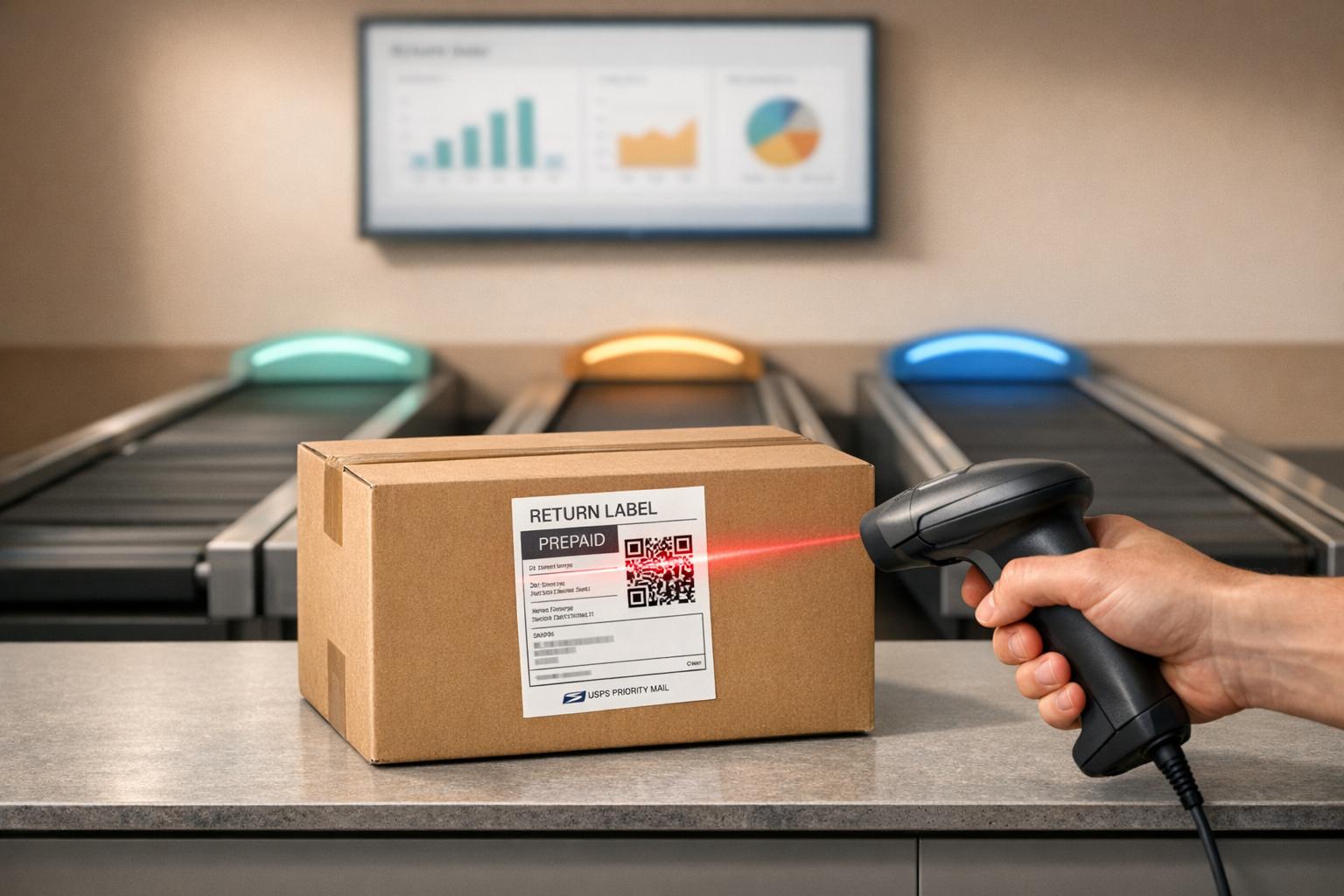
ForthRoute offers a customizable, branded self-service portal that makes returns hassle-free. Customers can start the return process by entering their order number and email, selecting the items they want to return, and providing a reason - all without contacting support. The app even generates prepaid QR code labels for major carriers, allowing customers to drop off packages using just their smartphones.
The setup process is quick - taking less than five minutes - and doesn’t require any coding skills. Plus, its webhook API ensures real-time updates with third-party logistics and warehouse management systems, keeping return receipt, inspection, and restocking data automatically synced.
These tools not only simplify returns but also support strategies to keep revenue in the business.
Revenue Retention
ForthRoute helps merchants minimize revenue loss by encouraging exchanges and store credit over refunds. Smart product recommendations guide customers toward swapping items, while the option for store credit is prominently featured as an alternative to cash refunds. This approach makes it easier for businesses to retain revenue while still offering customers flexible return solutions.
But ForthRoute doesn’t stop at revenue retention - it also takes the complexity out of return management through smart automation.
Automation Capabilities
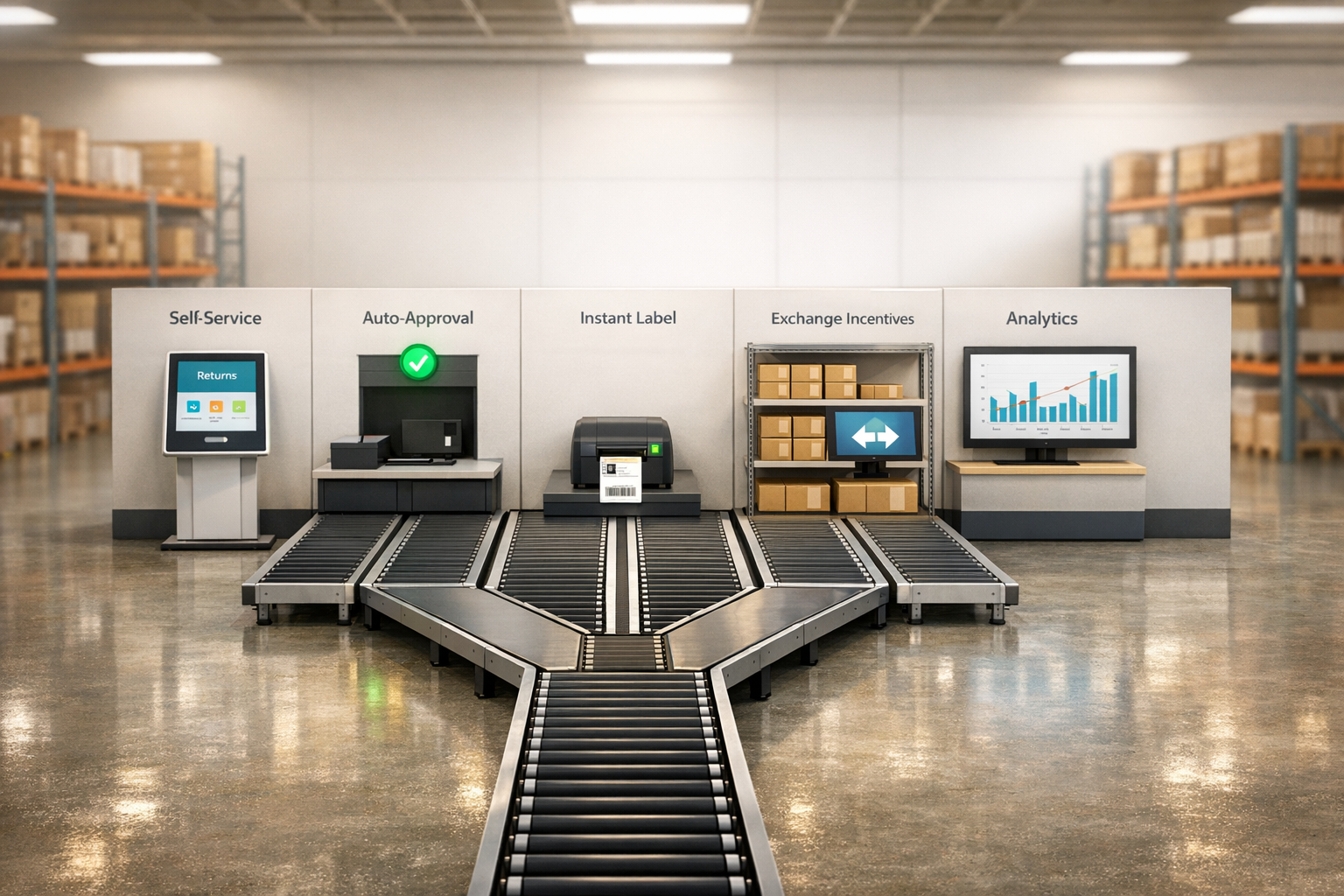
The app allows merchants to set custom policies, like return windows, product exclusions, and auto-approval rules. For example, stores can automatically approve returns under a certain dollar amount or decline items marked as final sale. These automated processes reduce the need for manual oversight, cutting down on support tickets and saving staff time. Instant label generation further streamlines the experience, making it scalable for stores of any size.
ForthRoute combines ease of use, revenue-saving strategies, and powerful automation to transform the returns process for Shopify merchants.
Pros and Cons
Choosing the right platform depends on your business's size, operational needs, and budget. Here's a closer look at two popular options:
Loop Returns stands out for handling over 2 million returns monthly, retaining more than $2.4 billion in sales, and achieving a 98% merchant satisfaction rate. Its "Shop Now" feature offers customers the ability to exchange for any store item, while Bonus Credits encourage store credit over refunds. However, its pricing can be tricky for businesses with high return volumes. Plans range from $59/month to $375/month, with additional variable fees for heavy usage. Another drawback is its reliance on Shopify, making it less adaptable for businesses using other platforms.
ForthRoute, on the other hand, is a no-cost solution that’s quick to set up - taking less than five minutes and requiring no coding. It covers the basics, such as automated approvals, QR code labels, exchange suggestions, and store credit options, all without charging a monthly fee. While this simplicity is great for smaller operations, it may not meet the needs of enterprises that require advanced analytics or more robust workflows.
Here's a side-by-side comparison to help you assess which platform fits your needs:
| Aspect | Loop Returns | ForthRoute |
|---|---|---|
| Best For | High-volume Shopify stores prioritizing exchanges | Budget-conscious merchants needing core automation |
| Pricing | $59–$375/month + usage fees | Free |
| Revenue Retention | Advanced (Bonus Credits, Shop Now, Instant Exchanges) | Standard (exchange suggestions, store credit) |
| Analytics | Available but sometimes slow | Basic tracking and insights |
| Platform Support | Shopify only | Shopify only |
| Setup Complexity | Reported learning curve | Under 5 minutes, no coding |
Each platform caters to different priorities. Loop Returns excels in revenue retention and advanced features but comes with higher costs and Shopify dependency. ForthRoute, meanwhile, is ideal for merchants seeking a straightforward, cost-effective solution.
Conclusion
Both Loop Returns and ForthRoute aim to help Shopify merchants retain revenue by turning returns into exchanges. The right choice for your business depends on factors like your store's size, budget, and operational needs.
Loop Returns is tailored for high-volume Shopify stores that need advanced tools to manage returns and boost revenue. Features like Bonus Credits, Shop Now exchanges, and a no-code workflow editor offer powerful automation for larger operations. However, smaller merchants might find the platform more complex and may experience slower support responses.
On the other hand, ForthRoute is designed for merchants with lower return volumes who want essential automation without ongoing costs. It’s quick to set up - taking less than five minutes - and doesn’t require coding. With features like auto-approvals, QR code labels, and exchange suggestions, all at no cost, it’s a practical option for small to medium-sized stores testing returns automation or working within tight budgets.
For businesses managing a high volume of returns and seeking advanced revenue retention tools, Loop Returns could be worth the investment. If your store operates on a smaller scale and you’re looking for simple, cost-free automation, ForthRoute provides the basics to streamline your returns process.
This breakdown should help you select the solution that aligns with your Shopify store’s returns strategy.
FAQs
Which Loop Returns plan fits my return volume?
Choosing the right Loop Returns plan comes down to your store's size and how many returns you handle. For smaller to mid-sized businesses, the basic plan starts at $155 per month. If you're a larger merchant dealing with a higher volume of returns, the advanced plan - priced up to $340 per month - might be a better fit. Take a close look at your operational needs and budget to decide which option works best for you.
What additional fees might Loop Returns charge?
Loop Returns has the option to include extra fees, like handling fees, in the return process. These fees can be set up in different ways: as a flat rate, as a percentage of the estimated label costs, or as a percentage of the return value. The specific setup depends on the details of the return policy.
How hard is Loop Returns to set up on Shopify?
Setting up Loop Returns on Shopify is a simple process that takes less than five minutes. It’s designed to be quick and hassle-free, so you can start managing returns with ease.